In brief: A European auto repair marketing plan should connect the makes and profitable services a shop can prove to one clear page each, then support those pages with local business facts, technician and project evidence, useful answers, and lead-quality measurement. It should not begin with a long list of keywords or near-duplicate city pages.
European repair customers often search with more context than “mechanic near me.” They may include a make, model, warning light, maintenance interval, diagnostic need, repair, or performance goal. A useful plan reflects those different decisions while keeping one clear commercial owner for each topic.
If you want implementation support, see our marketing system for performance and European auto shops. The steps below can also be used as an internal planning brief.
1. Choose the work the plan should attract
Start with business fit, not search volume. List the services the shop performs well, wants more of, and has capacity to accept. For each service, record:
- supported makes and platforms;
- typical customer problem or goal;
- required equipment, training, or process;
- realistic service radius;
- qualification questions before an estimate;
- evidence the shop is permitted to publish; and
- the action that counts as a qualified opportunity.
Routine European maintenance may draw from a tighter local radius. Advanced diagnostics, ECU work, track preparation, or specialist upgrades may justify regional visibility. The website and Google Business Profile should describe that reach accurately rather than implying locations the business does not operate.
2. Give each search intent one page owner
A compact architecture is usually easier to maintain and understand than hundreds of thin pages. A starting ownership map might include:
| Customer intent | Primary page type | Useful supporting evidence | |---|---|---| | European repair and maintenance | Core service page | Makes serviced, inspections, credentials, process | | Make-specific expertise | Make page when evidence supports it | Models, common services, tools, approved projects | | Diagnostics or warning-light concern | Service page or detailed guide | Diagnostic process, boundaries, next step | | Tuning or defined upgrade | Specialist service page | Platform fit, prerequisites, parts, limitations | | Completed project | Project or case page | Vehicle, objective, work, constraints, outcome |
Do not create a new page when an existing owner already answers the same question. Strengthen that page and link relevant guides or projects to it. This protects the commercial page from competing with its own supporting content.
3. Make expertise visible and verifiable
Searchers and answer systems need evidence they can retrieve. Convert knowledge that normally stays in the service bay into clear, permissioned website content:
- technician biographies and relevant credentials;
- diagnostic tools and what they help the shop evaluate;
- the makes, platforms, and service boundaries the team genuinely supports;
- project summaries with vehicle, objective, process, limitations, and approved photos;
- explanations of when a service is or is not appropriate; and
- aftercare, inspection, or maintenance guidance.
Write for a vehicle owner making a decision. Google’s people-first content guidance emphasizes content made to help an intended audience, with first-hand expertise and a clear purpose. That is a better standard than producing generic articles simply to cover keywords.
4. Connect local visibility to the website
Google says local results are mainly based on relevance, distance, and prominence. Complete and accurate business information helps Google understand and match a business to relevant searches. Review the official local ranking guidance before changing the profile.
Keep the business name, address or service-area model, phone, hours, categories, services, and website facts consistent. Add services the shop truly offers, use approved photos, and request reviews without scripting customers to include keywords. A profile cannot compensate for vague service pages, and a website should not contradict the profile.
5. Build a useful internal-link system
Every supporting guide or project should link to the commercial page that owns the service. Commercial pages should link to the strongest guides and evidence. Use descriptive anchor text that tells a person what the destination contains.
Google recommends standard crawlable links with real destinations and concise, relevant anchor text in its link guidance. The practical rule is simple: if a page matters, it should be reachable through a useful editorial link—not only through a search box, script, or sitemap.
For a performance shop, one documented job can support a commercial service page, a project page, a technical guide, and short social posts. Our performance-shop content guide shows how to capture that source material without publishing unsupported claims.
6. Measure qualified demand, not traffic alone
Record enough context to decide whether the plan is attracting useful work:
- source and landing page;
- requested make, model, and service;
- call, form, or booking outcome;
- qualified or unqualified status;
- estimate or opportunity created; and
- accepted work and revenue when available.
Broad enthusiast traffic can be valuable for awareness, but it should not be reported as equivalent to repair or project demand. Review landing pages and actual sales feedback together.
A practical first 90 days
Days 1–30: confirm services, makes, evidence, page ownership, business facts, measurement, and technical/indexing condition.
Days 31–60: improve the highest-value commercial pages, publish approved team and project proof, align the Business Profile, and repair internal links.
Days 61–90: publish the first supporting guides, review Search Console queries and qualified inquiries, then expand only where evidence supports a distinct customer need.
This is a work sequence, not a promise of a ranking or lead result. Timing depends on the starting site, competition, authority, implementation speed, service mix, geography, and conversion process.
Evidence from a specialist-shop campaign
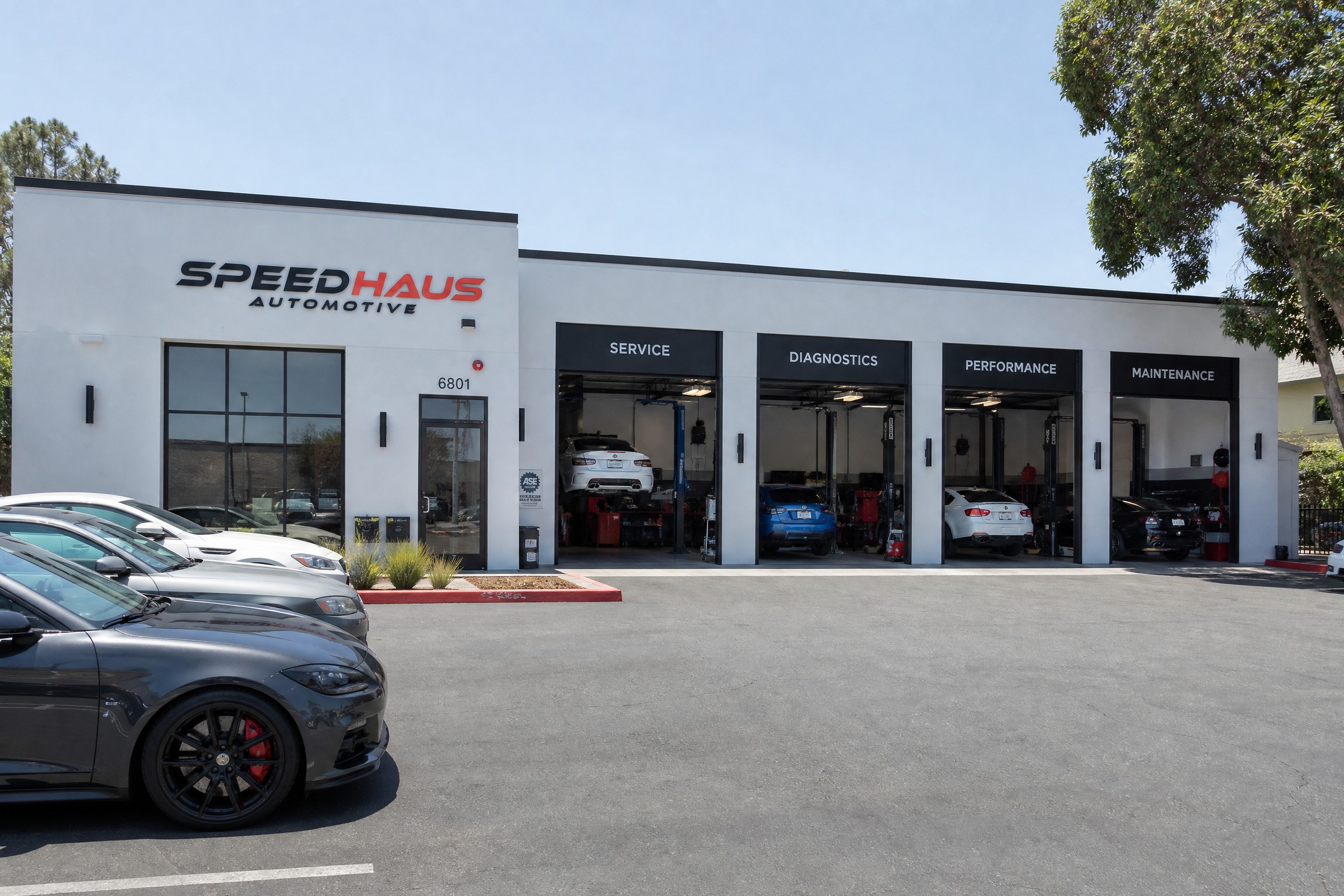
Our Speedhaus Automotive case study documents how a European performance and repair specialist built visibility around focused service topics. Monthly organic clicks increased from 15 in April 2025 to 246 in May 2026, and a focused BMW ECU unlock page generated 170 clicks during the reported period. Those figures describe one campaign, not a forecast for another shop.
Auto Shop Digital’s Foundation plan brings the website, local SEO, Google Business Profile, content, reviews, AI visibility, and reporting into one managed system.
Frequently asked questions
Should a European repair shop create a page for every make?
Only when the shop has real expertise, useful differentiation, and enough evidence to make the page valuable. Otherwise, a well-built European repair page with clear make coverage may be the better owner.
Can repair and performance services share one page?
They can share an industry hub, but a shop site should separate them when the customer questions, process, proof, or inquiry path differ materially.
Does a European auto shop need local pages?
Only for markets it genuinely serves and can describe usefully. Do not create thin location pages or imply a staffed location that does not exist.
What should the shop measure first?
Establish reliable records for calls, forms, bookings, requested services, qualification, and landing pages. Rankings and traffic are diagnostic signals; qualified opportunities are the business outcome.