In brief: Performance-shop content marketing turns real work into durable source material. Capture the vehicle, customer objective, baseline, parts, process, constraints, and approved outcome once; then use that evidence on the relevant service page, a project page, a technical guide, and social content. The website should remain the searchable source of truth.
Performance and tuning shops already create compelling material every day. The problem is often not a shortage of content—it is that the useful details live in technicians’ heads, private messages, camera rolls, or social feeds. A repeatable capture process makes that expertise understandable to prospective customers and retrievable by search and AI-answer systems.
For the wider commercial strategy, start with our performance and European auto-shop marketing page.
Capture one reliable source record per project
Before drafting a post, collect a structured project brief:
- vehicle year, make, model, and platform;
- customer objective and intended use;
- starting condition or diagnostic baseline;
- parts, software, tools, and services involved;
- important prerequisites or compatibility constraints;
- work performed and why that approach was chosen;
- limitations, trade-offs, or items outside scope;
- observed outcome that can be substantiated; and
- approval for names, images, specifications, and results.
Do not fill gaps with assumptions. A concise, accurate project record is more valuable than an impressive story the shop cannot verify.
Turn the record into a connected content set
One project can serve several formats without publishing the same page repeatedly.
Strengthen the commercial service page
Add a short example, relevant image, or link to the full project. The service page remains the owner for customers evaluating that work and should explain fit, process, boundaries, proof, and the next step.
Publish a project page
A project page should tell a factual story: what arrived, what the customer wanted, what the shop evaluated, what was done, and what the approved evidence shows. Link it to the service page and relevant technical guide.
Answer one technical question
Use a guide to address a question customers ask before booking. Examples include prerequisites for an ECU unlock, differences between suspension options, what a diagnostic appointment covers, or how a track-use goal changes a recommendation. Keep the guide educational and point commercial intent back to the service owner.
Create social and video derivatives
Use the same verified facts for a short walkthrough, image carousel, technician clip, or email feature. Link interested viewers to the complete website source instead of leaving the useful explanation only inside the feed.
Write for buyers as well as enthusiasts
Enthusiast traffic is not automatically qualified demand. A useful page helps the right owner decide whether to contact the shop. Include:
- who the service is for;
- compatible platforms or necessary inspection steps;
- what the process includes and excludes;
- questions the customer should be ready to answer;
- realistic dependencies without promising an outcome; and
- the correct inquiry route.
Google’s people-first content guidance asks whether content demonstrates first-hand expertise, serves an intended audience, and leaves the reader satisfied. Workshop-derived content can meet that standard when it explains real decisions rather than repeating generic definitions.
Build internal links around page ownership
Every guide and project should have a clear relationship to its commercial owner:
- project page → service page;
- guide → service page;
- service page → strongest project and guide;
- case study → relevant industry hub; and
- related guide → companion guide when the next question is genuinely useful.
Use normal anchor links with descriptive text. Google’s crawlable-link guidance explains that links help people and search engines discover and understand pages. Avoid anchors such as “click here” when “BMW ECU tuning prerequisites” is more informative.
A monthly capture workflow
During intake: record the customer goal, vehicle, intended use, and permission status.
During diagnosis or planning: capture the baseline, decision factors, limitations, and selected approach.
During the work: take approved landscape and detail photos, note parts and process, and record short technician explanations.
At handoff: confirm what changed, care or inspection guidance, and which details may be published.
During editorial review: verify facts with the technician, remove customer information, connect the page to its service owner, and add a meaningful next step.
Content quality and safety checks
Before publishing, ask:
- Can every performance, ranking, revenue, or outcome claim be substantiated?
- Are product names, specifications, and compatibility details current?
- Does the page explain limitations and prerequisites?
- Is the customer’s permission recorded?
- Does the image alt text describe the image rather than stuff keywords?
- Is there one obvious commercial page for the service?
- Does the inquiry path collect enough information to qualify the project?
Measure content by its role
Use Search Console to see whether a guide earns relevant impressions and clicks, but connect those signals to inquiry data. Track the landing page, requested service, vehicle, qualification, estimate, and accepted work when possible. A technical article may assist a later branded visit, so do not judge every page only by last-click conversions.
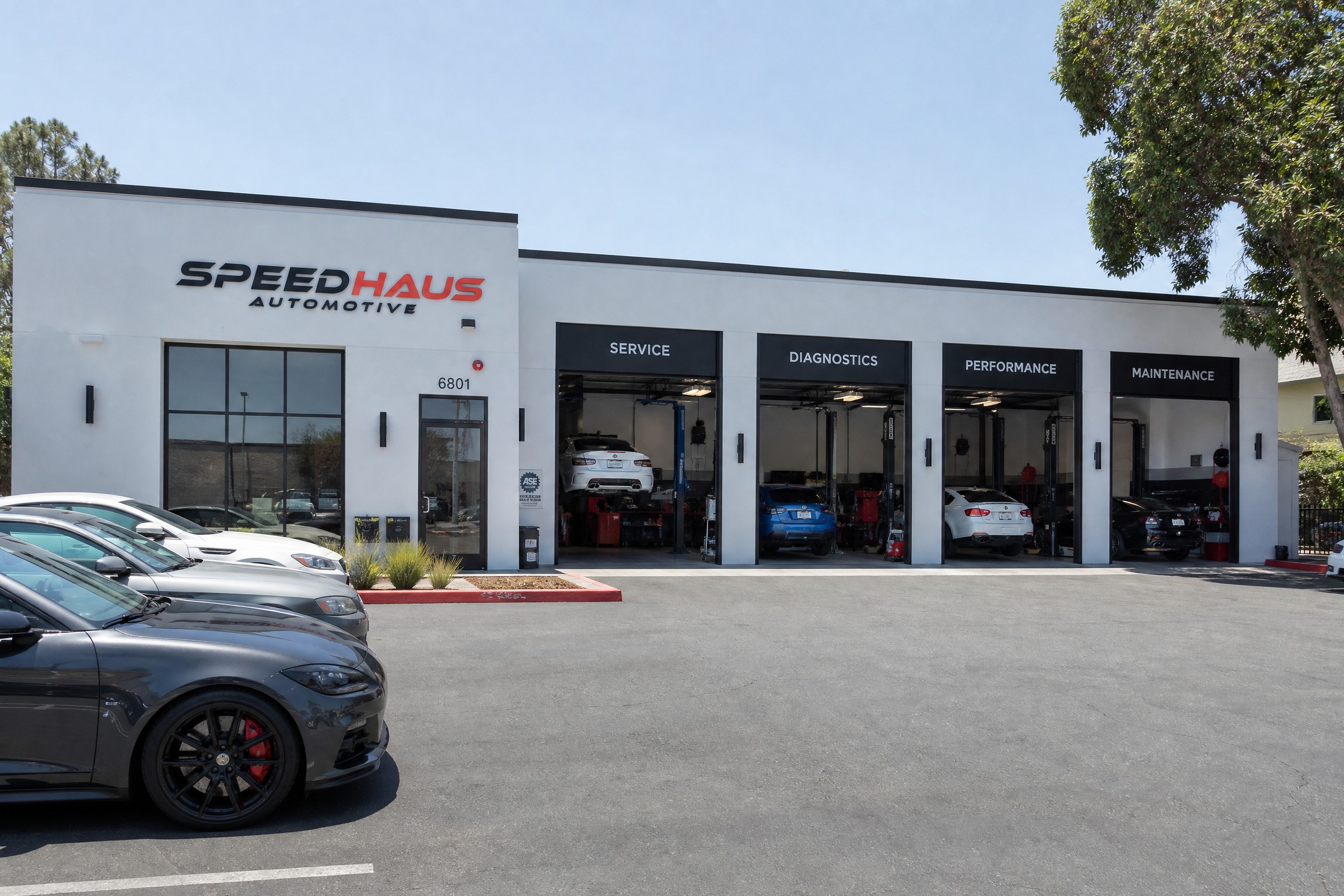
Our Speedhaus Automotive case study documents focused landing-page visibility from a European performance-shop campaign, including 170 organic clicks to a BMW ECU unlock page during the reporting period. That is campaign evidence, not a promised result.
For a broader acquisition sequence, use the European auto repair marketing plan. Auto Shop Digital’s Foundation plan can manage the connected website, local SEO, content, reviews, AI visibility, and measurement system.
Frequently asked questions
How often should a performance shop publish content?
Use a cadence the team can verify and sustain. A smaller number of technically accurate projects and guides is preferable to frequent generic posts.
Should every build become a case study?
No. Prioritize projects that support a service the shop wants to sell, answer useful customer questions, include permissioned evidence, and add something distinct to the site.
Can Instagram be the main content channel?
It can remain an important discovery channel, but the most useful facts should also live on crawlable website pages that connect to services and inquiry paths.
What should a project inquiry form ask?
Ask for contact information, vehicle details, objective, relevant modifications or symptoms, desired timing, and the best way to continue. Keep the form short enough to complete while gathering what the shop needs to qualify the request.