> **TL;DR:** Dealership marketing in 2026 is an omnichannel, data-driven discipline — not just running ads. Success requires an AI-ready website, VIN-level attribution, strong local SEO, and integrated campaigns across search, social, video, and streaming. Auto Shop Digital brings proven organic and local search systems from the independent repair world to dealership sales and fixed ops, lowering long-term cost per lead and compounding returns over time.
## Introduction: Why Auto Dealership Marketing Solutions Matter in 2026.
Car dealership marketing has shifted dramatically since 2020. What once relied on newspaper ads and radio spots now demands an omnichannel, analytics-led approach where every campaign ties back to measurable revenue. Most buyers begin their automotive purchase journey online, and dealership marketing spans search, social, video, and websites simultaneously.
Today's vehicle shoppers typically touch 8–12 online channels — Google, Maps, TikTok, YouTube, third-party listings, and AI chat tools — before stepping into a showroom. According to an Urban Science / Harris Poll study, 44% of buyers now spend more time researching before contacting a dealer, and 25% are more likely to complete a purchase entirely online.
This article is a practical guide for dealer principals, GMs, and marketing managers looking to unify their [automotive digital marketing](/blog/automotive-digital-marketing-strategy), reduce wasted ad spend, and improve measurable ROI. Auto Shop Digital comes from the automotive service side — independent repair and fixed ops SEO — and applies the same proven local search and content systems to sales-focused car dealerships.
## What Is Car Dealership Marketing in 2026?
Car dealership marketing now means orchestrating search, social, video, streaming, email marketing, and your dealership website into one connected growth system. It goes far beyond placing ads. The definition has expanded to cover a lifecycle ecosystem spanning inventory visibility, fixed-ops revenue, financing tools, and pre-purchase digital touchpoints across dozens of channels.
The critical difference from generic digital advertising is attribution depth. While impressions and ad clicks tell you something, automotive marketing in 2026 connects campaigns to VIN-level sales, service ROs, and customer lifetime value. BCG reports that 93% of dealers now use AI in some capacity for pricing, inventory, and engagement. Data-driven strategies improve lead-to-sale ratios significantly when tools like CRM, DMS, call tracking, and analytics platforms work together under one roof.
Dealers using digital retailing tools generate roughly 47.9% more high-quality leads, according to Dealer Spike's 2026 benchmark data. Inventory-based ads that link directly to vehicle detail pages are a hallmark of this integrated model.
## Core Goals of an Effective Dealership Marketing Strategy.
Every marketing decision should ladder up to clear, measurable goals:
* **More qualified leads** — Top-performing dealers generate 4.5× more leads than average. Target forms, calls, and chats.
* **Higher VDP engagement** — Vehicle detail pages with video walkarounds and real pricing drive deeper sessions.
* **Shorter days on lot** — Reducing aging inventory below 20% of stock at 90+ days protects margins.
* **Improved service appointment utilization** — Nearly half of dealership service customers are unaware of additional services offered — marketing should close that gap.
* **Stronger local search visibility** — Ranking in the Google Maps 3-pack for both sales and service queries.
* **Better online reputation** — Higher Google ratings and review volume build instant trust.
* **Lower cost per sale and cost per RO** — Budget optimization can increase lead conversion by 200%.
## Building a Dealership Marketing Strategy Step-by-Step.
Here's a practical sequence any dealer can follow:
1. **Define target audiences** by segment — new vs. used buyers, EV vs. ICE, payment-conscious shoppers, first-time buyers, service-only customers — using historic CRM and DMS data from the last 12–24 months.
2. **Map the buyer journey** from first search ("Honda dealer near me," "oil change Columbus OH") through website visit, lead submission, and showroom or service visit. The average journey now includes 24 touchpoints, with 19 of them digital.
3. **Choose your channel mix** (SEO, Google Ads, Performance Max, Meta, TikTok, streaming TV, email, direct mail) based on where your real customers engage — not assumptions.
4. **Set budgets by profit center and inventory priority.** The average franchise dealership spends roughly $543,000/year on advertising, with about 73% flowing to digital channels.
5. **Define KPIs and reporting cadence.** Weekly and monthly reviews should cover cost per lead, cost per sale, RO value, and lead-to-appointment ratios.
6. **Implement a test-and-learn framework.** Commit to A/B testing creative, offers, and landing pages every 30–45 days.
For more foundational tactics, see our [car dealer marketing tips](/blog/car-dealer-marketing-tips).
## Aligning Dealership Inventory with Market Demand.
Marketing performance is capped by how well your dealership inventory matches local demand. In 2024–2026's volatile used and EV markets, this alignment is make-or-break.
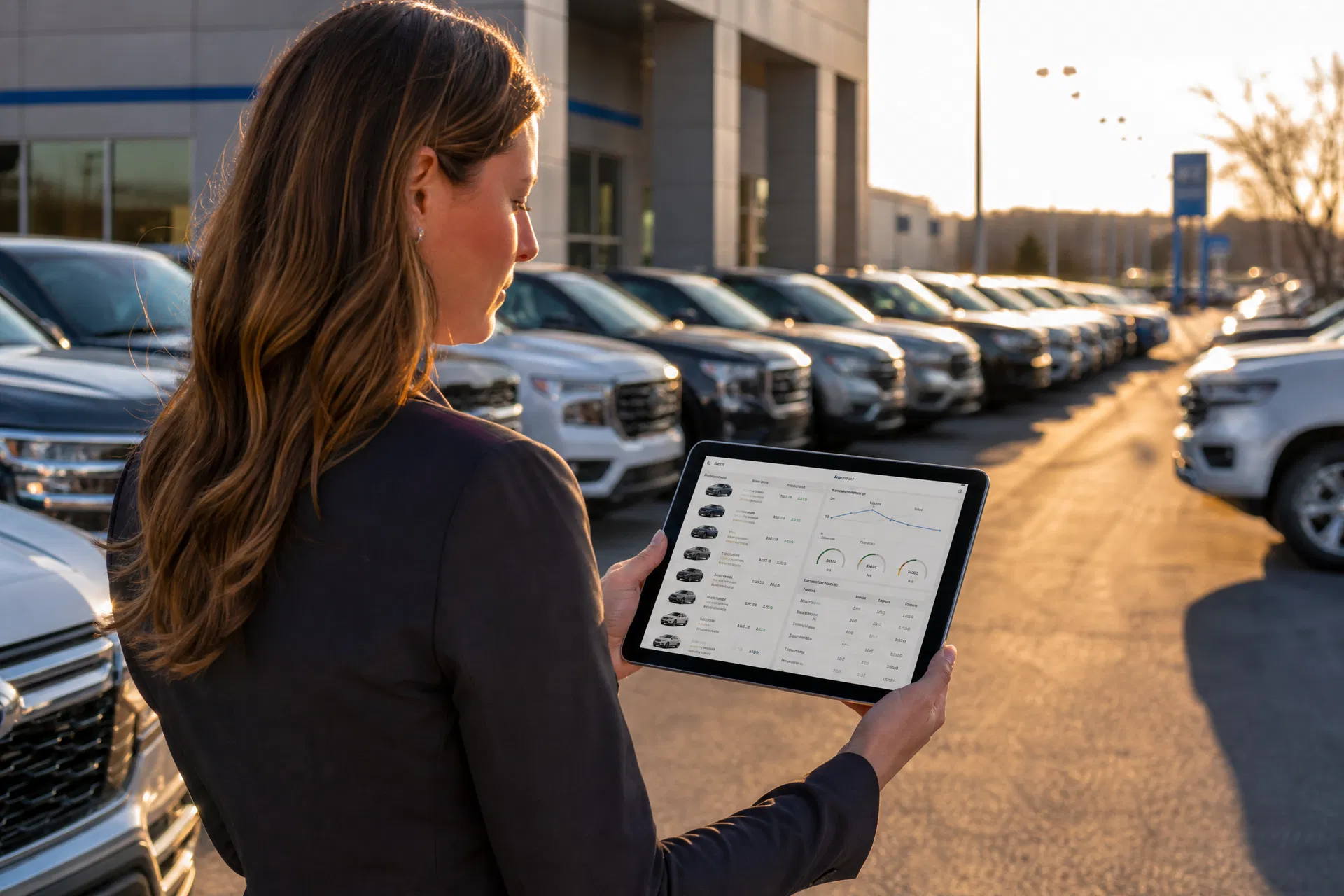
Sales history, OEM incentives, and regional search trends (like "used trucks in Dallas" or "2025 hybrid SUV deals Seattle") should guide both vehicle acquisition and promotion. Predictive analytics can identify vehicle trends before they emerge, giving you a head start on stocking the right models.
Tag overstock, aged units (60+ or 90+ days), and high-demand vehicles so ad platforms and website merchandising prioritize them automatically. Dynamic inventory feeds powering ads and website modules highlight in-demand or incentive-backed models without manual updates. Run quarterly inventory/marketing alignment reviews using DMS data and Google Search Console insights.
## Optimizing Your Dealership Website for Conversion.
Your website is the central performance engine that turns paid and organic traffic into test drives, calls, and service appointments. Website leads convert 200% better than third-party sources, making your owned digital property your most valuable asset.
Key conversion elements include:
* **Mobile-first design** — About 71% of automotive digital interactions happen on mobile devices.
* **Fast load times** — Target 2–3 seconds with image compression, lazy loading, and CDNs.
* **Sticky click-to-call buttons and clear forms.**
* **Visible payment calculators** — Dealers using digital retail tools generate ~47.9% more high-quality leads.
For vehicle detail pages, prioritize high-quality photos, walkaround video embeds, real-time pricing, monthly payment estimates, and prominent CTAs (test drive, unlock price, value trade). Auto Shop Digital can redesign or tune existing dealer sites with SEO-optimized structure and CRO best practices learned from [auto repair and body shop clients](/blog/auto-dealer-website-builder).
## Search Engine Optimization (SEO) for Car Dealerships.
SEO is the foundation of long-term, lower-cost lead generation for car dealerships and fixed ops departments. Improving SEO can enhance your website's organic search rankings, driving sustained traffic without paying for every click.
Auto Shop Digital specializes in [local SEO for automotive businesses](/services/managed-local-seo) and adapts proven repair-shop frameworks to dealership sales and service pages.
### Local SEO & Google Business Profile Optimization.
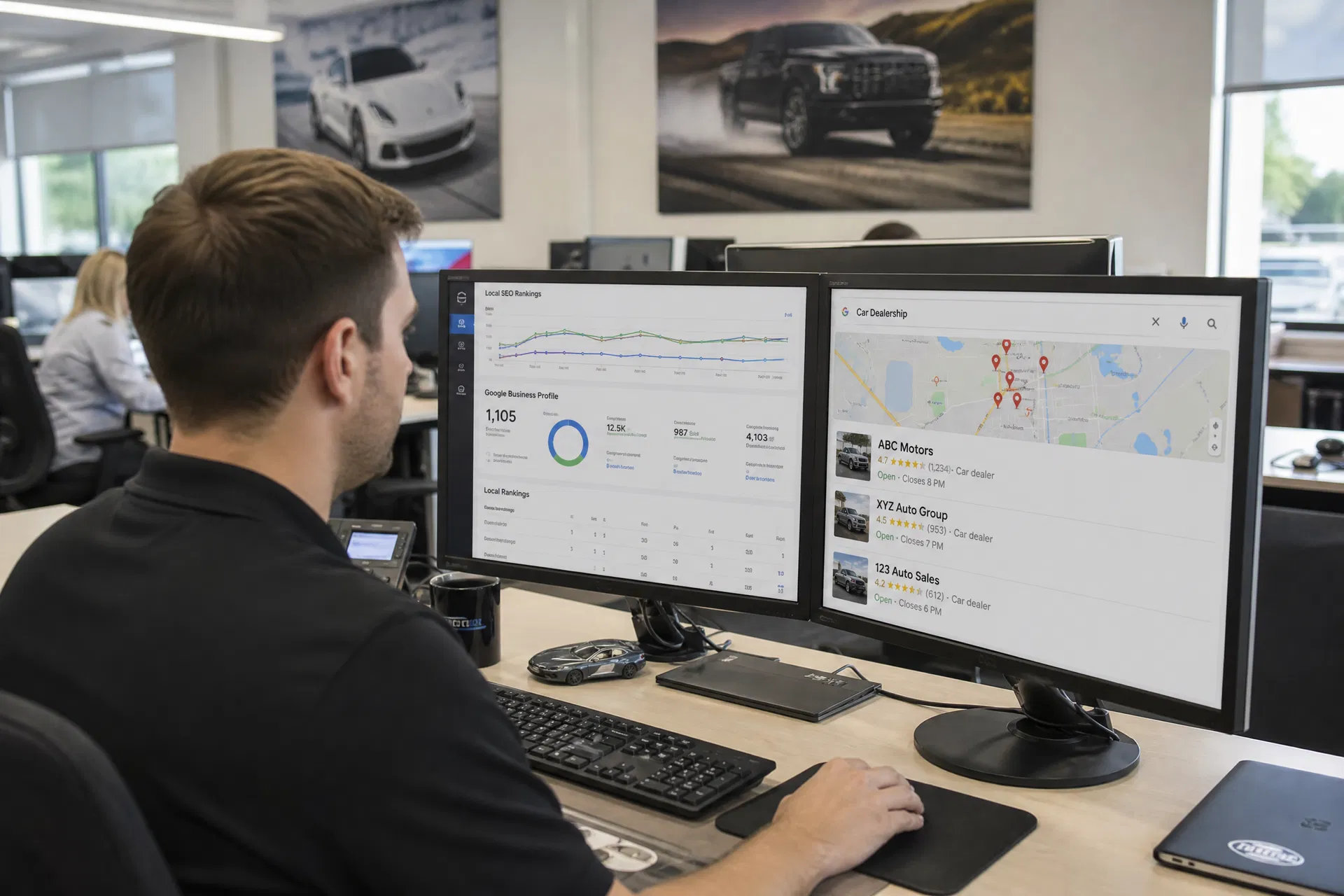
Ranking in the Google Maps 3-pack for "car dealer near me" and "oil change near me" is critical for both showroom and service traffic. Optimization tasks include accurate NAP (name, address, phone), correct categories, service attributes, hours, and holiday hours. Post weekly [Google Business Profile](/services/managed-google-business-profile) updates highlighting current specials, new arrivals, and fixed ops offers.
### Content Strategy for Dealership Websites.
Content is how you win both traditional search engines and AI-driven answer engines. Model landing pages, comparison pages (like "2025 CR-V vs RAV4"), financing FAQs, EV charging guides, and fixed ops service pages each capture different segments of demand. Use localized content: seasonal service tips, community sponsorship posts, and local customer stories.
### Technical SEO and Site Health.
Technical SEO matters more on inventory-heavy dealership sites with thousands of URLs. Regular audits should fix duplicate VDPs, thin content, broken links, index bloat, and incorrect canonical tags. Structured data — Vehicle schema, LocalBusiness, FAQ — powers rich results and helps AI engines understand your pages.
## Advertising Strategy: Paid Search, Social, and Streaming.
Paid channels accelerate results, move priority inventory, and complement organic efforts when managed with tight attribution. The key is aligning keywords, audiences, and creative with real-time dealership inventory and OEM incentives.
### Paid Search and Inventory-Aware Campaigns.
[Google Ads](/services/managed-google-ads), Microsoft Ads, and vehicle listing ads (VLAs) capture high-intent vehicle shoppers searching for specific models or dealers. Structure campaigns by brand, model, and intent ("buy," "lease," "used near me") with negative keyword management to protect budget.
Inventory-aware campaigns automatically pause or push ads based on stock, pricing changes, and aging units through a live inventory feed. Close integration with CRM and DMS enables VIN-level tracking to connect ad spend to specific vehicle sales.
### Social Media and Video Advertising for Dealerships.
Meta, TikTok, YouTube, and Instagram Reels showcase inventory, staff, and customer stories to build trust and demand. Dynamic inventory ads on Facebook and Instagram retarget visitors with vehicles they viewed or similar models.
Short-form video is powerful: 30–60 second walkarounds, service bay tours, and "meet your advisor" clips humanize the brand. Segment audiences into in-market shoppers, past customers, service-only visitors, and local lookalike audiences for conquesting.
### Streaming TV, Audio, and Omnichannel Campaigns.
CTV and streaming audio (Hulu, YouTube TV, Spotify, Pandora) give dealer groups premium, brand-safe reach with better targeting than legacy broadcast. Omnichannel packages combining streaming, display, social, and email work well for major sales events — Memorial Day, Labor Day, model-year closeout.
## Data, Analytics, and Call Tracking.
Data is the backbone of all modern automotive marketing. Core tools include Google Analytics 4, call tracking software, CRM reports, DMS exports, and ad platform dashboards. Assign unique numbers per channel (PPC, SEO, CTV), record calls, and tag outcomes (sales, service, parts, missed).
True dealer marketing solutions connect ad spend to actual deals and ROs through VIN-level and RO-level attribution — not just leads. Dealerships can track over 180 KPIs for marketing performance when the right tools are in place.
## AI, Answer Engines, and "AI-Ready" Dealership Sites.
Generative engines like ChatGPT, Gemini, and Microsoft Copilot increasingly answer shopper questions before they ever click to a website. Fullpath's Auto Intelligence Index reports a 15× year-over-year increase in AI referral traffic to dealer sites.
"AI-ready" content means clear, factual, well-structured pages that answer specific questions about models, financing, warranties, and service in natural language. Add structured FAQs, how-to content, and local guides that AI tools can confidently reference. Clean up technical SEO, schema, and E-E-A-T signals — expertise, experience, author bios — to build trust with AI systems.
## Fixed-Ops and Service Marketing Solutions.
Service and body work marketing is essential in 2026 as vehicle lifespans increase and EV maintenance patterns shift. Fixed ops often carries higher long-term margins than front-end car sales, making it a critical revenue stabilizer.
Tactics include seasonal campaigns (winterization, tires, AC), recall communications, and lapsed-customer outreach for ROs older than 12 months. Local SEO for service keywords ("brake repair Phoenix," "collision repair Austin") with dedicated service landing pages captures high-intent traffic for each profitable job type. See our [body shop advertising ideas](/blog/body-shop-advertising-ideas) for proven fixed-ops tactics.
## Building and Protecting Your Online Reputation.
Reviews influence both local rankings and buyer trust across Google, DealerRater, Cars.com, and Facebook. Create a systematic review generation program: automated SMS/email requests 24–48 hours after purchase or service with simple one-tap links.
Respond to every review — fast, professional, and personalized — addressing both praise and complaints. Leverage positive reviews and testimonials in ads, landing pages, and social content to drive traffic and build credibility.
## Choosing the Right Automotive Marketing Partner.
Most dealerships benefit from a specialized marketing agency rather than building every skill in-house. Evaluation criteria should include:
* Transparent reporting and VIN/RO-level attribution.
* Automotive-specific experience (DMS, CRM, inventory feed integrations).
* Call tracking and campaign performance measurement.
* A proven track record with similar dealerships or markets.
Beware "black box" agencies that cannot clearly connect ad spend to sales or service outcomes. A month-to-month model with performance guarantees — like Auto Shop Digital's 90-day SEO guarantee and no setup fees — lowers dealer risk. Learn more about what sets specialized partners apart in our [automotive digital marketing strategy guide](/blog/automotive-digital-marketing-strategy).
## Common Dealership Marketing Mistakes to Avoid.
Avoid these frequent pitfalls that drain budget and stall growth:
* Over-relying on third-party leads instead of building first-party traffic and data via SEO and content.
* Sending all traffic to the homepage instead of specific VDPs or campaign landing pages.
* Running campaigns without proper call tracking and UTM tagging.
* Ignoring fixed-ops marketing, even though service often carries higher long-term margins than front-end sales.
* Underutilizing reviews and user-generated content in ads and on the website.
* Changing vendors or strategies too quickly (every 60 days) before data accumulates.
* Neglecting mobile optimization, despite the majority of shoppers browsing on phones.
## How Auto Shop Digital Supports Automotive Businesses.
While Auto Shop Digital is best known for helping independent auto shops, our SEO, content, and local search systems directly support dealer fixed-ops and local brand visibility.
Core marketing services relevant to dealerships:
* Managed SEO and [Google Business Profile optimization](/services/managed-google-business-profile).
* Technical site audits and ongoing monitoring.
* Content strategy and keyword-targeted editorial calendars.
* [Automotive website improvements](/blog/auto-dealer-website-builder) with conversion-focused design.
Our value props: no setup fees, a 90-day performance guarantee on SEO, and month-to-month agreements designed to reduce risk. Ready to see what organic and local search can do for your dealership? [Get a free SEO audit](/seo-audit) to discuss more map-pack visibility, more service bookings, and more cars sold through search.
## FAQ: Auto Dealership Marketing Solutions.
### How long does it take to see results from a new dealership marketing strategy?
Paid search and paid social can impact lead volume in 2–4 weeks, while SEO and content improvements typically show compounding gains over 3–6 months. Fixed-ops campaigns may show faster measurable ROI because service demand is more constant than new-vehicle demand. Give any integrated strategy at least 90 days before making major structural changes.
### How much should a dealership invest in marketing each month?
A common rule of thumb is 5–10% of gross revenue, but actual budgets depend on market size, growth goals, and inventory position. Create separate budget buckets for sales and fixed-ops with clear KPIs (cost per sale vs. cost per RO) for each. Smaller independent stores should prioritize organic and local channels first to stretch limited budgets.
### Should we manage dealership marketing in-house or hire an agency?
In-house teams have brand intimacy but often lack depth in SEO, analytics, and rapidly evolving ad platforms. A hybrid model — where internal staff handle brand and content while a specialized marketing agency manages SEO, technical, and paid media execution — often delivers the best results.
### How can we better connect sales and service marketing efforts?
Integrating CRM, DMS, and marketing tools allows dealers to follow customers from lead to sale to first service visit and beyond. Set up automated campaigns: service reminders tied to purchase date, trade-in equity alerts at 24–36 months, and loyalty offers for multi-RO customers.
### What KPIs should we track to know if our dealership marketing is working?
Core KPIs include lead volume by channel, VDP views, showroom and service appointments, cost per lead, cost per sale, cost per RO, and days on lot. Track [Google Business Profile](/services/managed-google-business-profile) metrics — calls, direction requests, website clicks — and organic rankings for key local terms.
Auto Dealership Marketing Solutions: A Complete 2026 Playbook
By Daniel Harman•July 2026
Ready to Grow Your Auto Shop?
Turn Readers Into Customers
Our turn-key marketing services are built exclusively for auto repair shops. Pick the service that fits your goals and get started today.
Managed Local SEO
Rank higher on Google and Google Maps for 'auto repair near me' searches.
Google Business Profile
Dominate the Local Pack with a fully optimised Google Business Profile.
Google Ads
Get immediate leads with targeted PPC campaigns for auto repair keywords.
Website Design
A fast, SEO-optimised website built to convert visitors into booked jobs.
Related Articles
Marketing
Car Dealership Advertising: A Practical Guide to Smarter Ad Spend in 2026
A practical 2026 guide to car dealership advertising — covering Google Ads, VLAs, Meta AIAs, video, email, local SEO, and budgeting to lower cost per sale and drive more leads.
Read more
Marketing
Attract More Customers Online Without Complicated Web Design Hassles
An automotive web design agency builds websites that rank locally, convert on mobile, and fill your bays — not generic templates. See how specialized design drives real leads for auto shops.
Read more
Marketing
Auto Shop Digital vs. Autoshop Solutions: Which Automotive Marketing Agency Is Right for Your Shop?
Comparing Auto Shop Digital vs. Autoshop Solutions? See a side-by-side breakdown of pricing, setup fees, contract terms, SEO methodology, and performance guarantees to help you choose the right automotive marketing agency.
Read more