TL;DR: Opening an auto repair shop in 2026 requires more than mechanical skill — you need a solid business plan, the right legal structure, $80k–$250k in startup capital, and a digital marketing strategy from day one. This step-by-step guide covers everything from LLC formation and permits to equipment, staffing, and local SEO so you can open your doors with confidence and fill your bays faster.
1. Understanding What It Really Takes to Own an Auto Repair Shop.
Opening an auto repair shop in 2026 means combining technical skills with business, legal, and marketing responsibilities. Owning your own automotive repair shop is fundamentally different from being a technician — payroll, taxes, permits, staffing, and customer service now sit squarely on your shoulders.
Common shop models include:
- Full-service automotive repair shop — brakes, A/C, tires, diagnostics, engine work
- Specialty shop — European brands, diesel, hybrid/EV service
- Diagnostic & drivability clinic — electrical, ADAS calibration, computer diagnostics
- Fleet-focused repair shop — contracts with businesses, municipalities
Expect 5–6 days a week, 8:00 AM–6:00 PM, plus after-hours bookkeeping and marketing. A solo owner-operator often nets under $55k annually. A multi-bay repair shop with 3–5 techs can net $100k–$200k for the owner once established. Mobile mechanic startup costs range from $5K to $15K if you want to start smaller, then transition into a fixed-location shop later.
2. Creating a Focused Business Plan for Your Own Automotive Repair Shop.
Your business plan doesn't need to be 100 pages, but it must be specific enough to show a bank or investor how your shop will make money. A solid business plan is essential for success — and for SBA loan applications, especially if you plan to compete aggressively using Google Business Profile optimization and local search.
Core elements to include:
- Services offered — oil change, brakes, A/C, diagnostics, general repair
- Target customers — commuters, fleets, performance car owners
- Market research — map competitors by service mix, pricing, online presence
- Pricing strategy — labor rate benchmarking, tiered parts markup
- Niche selection — choosing a specialty early (European auto repair, diesel, hybrid/EV) helps establish authority and stand out in your city
Example: A 4-bay mechanic shop in a mid-size city focusing on domestic vehicles, brakes, and A/C within a 5-mile radius of a major highway. Labor rate: $130/hour. Target: 8–15 repair orders per day by year 2, with an average repair order value of $450–$750. That business model can reach break-even within 12–18 months.
3. Legal Setup, Required Permits, and Licenses.
Legal setup varies by state and city, but every new automotive repair shop shares common steps. Opening an auto repair shop involves careful planning and compliance with local regulations.

- Choose a legal entity. A limited liability company (LLC) protects personal assets from business liabilities and is the most common choice for auto repair shop owners. Sole proprietorships have simpler tax structures but offer no personal asset protection. An S-corp election may reduce self-employment tax but requires stricter compliance.
- Obtain an EIN. An employer identification number is mandatory for mechanic shops — required for hiring employees, opening a business bank account, and filing taxes. Apply free on the IRS website; approval is often within minutes.
- General business license. Many cities require it before opening your doors. Check your local city hall or Department of Revenue website.
- Required permits. Typical permits include a local repair shop license, fire department safety inspections, hazardous waste disposal permit, and environmental permits for handling fluids and refrigerants.
- EPA MVAC Section 609 certification is needed for servicing motor vehicle air conditioning systems. Shops must use certified equipment and follow refrigerant handling rules.
- Certificate of Occupancy. Required for mechanic shop buildings — verify zoning allows an auto repair shop at your chosen address before signing a lease.
4. Money, Banking, and Insurance: Protecting Your New Mechanic Shop.
Many promising shops fail in the first 3 years because they underestimate startup costs and mix personal and business finances.
2026 cost breakdown for a 3–4 bay shop:
| Category | Secondary Market | Metro Area | |---|---|---| | Equipment (lifts, diagnostics, A/C) | $60k–$160k | $80k–$160k+ | | Build-out / tenant improvement | $50k–$100k | $80k–$150k | | Initial parts inventory | $10k–$30k | $15k–$30k | | Insurance, licenses, permits | $7k–$20k | $10k–$20k | | Working capital (3–6 months) | $25k–$50k | $40k–$75k | | Total | $80k–$250k | $150k–$300k+ |
Funding options include SBA 7(a) loans, equipment financing for lifts and alignment racks, lines of credit, or purchasing an existing auto repair shop to reduce ramp-up time. Paid channels like Google Ads for auto repair shops can help drive early car count once you open.
Opening a dedicated business bank account is essential — clean bookkeeping, easier tax filing, professional payments, and building business credit. Look for small business-friendly banks offering merchant services, payroll integration, and mobile banking.
Key insurance types:
- General liability insurance to protect against customer injury and third-party damages
- Garage keepers insurance protects vehicles in your care
- Commercial property insurance covers building, equipment, and inventory
- Workers' compensation insurance is necessary if hiring employees
- Cyber liability if collecting customer data or using online payment systems
Consult an accountant early to plan for expenses, depreciation, and tax strategy.
5. Location, Layout, Tools, and Staffing Your Auto Repair Shop.
The right location and layout can make all the difference in car count, shop efficiency, and customer trust. Location affects customer reach and visibility, but strategic local SEO for auto repair shops is just as critical for being discovered online.
Location criteria:
- Select a strategic location with high visibility and easy access from main roads
- High-visibility spots near residential areas attract more customers
- Proximity to dealerships can increase customer traffic to your shop
- Zoning compliance is crucial — verify your address sits in commercial districts approved for automotive use
- Sufficient square footage is necessary for proper shop operations
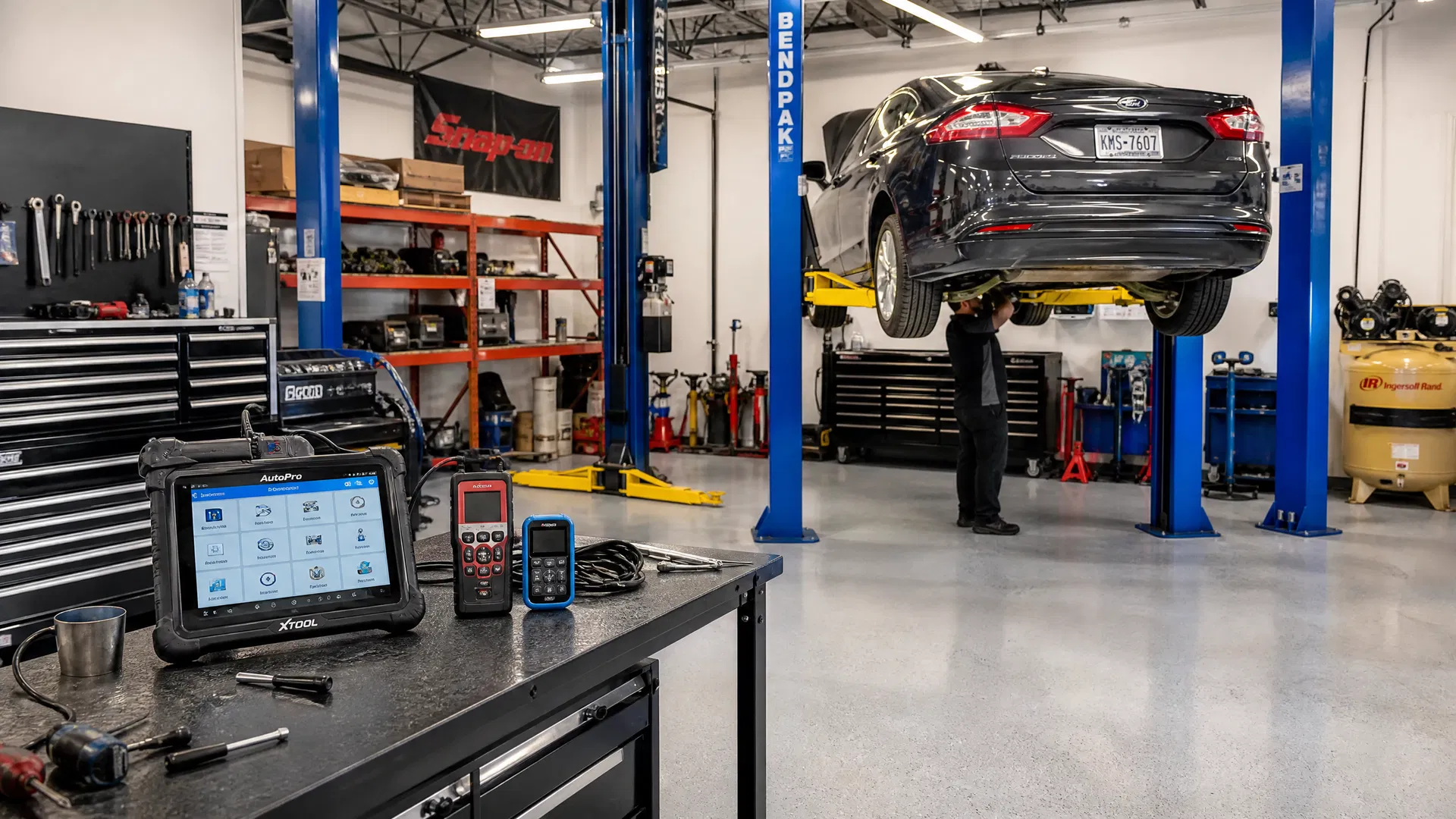
Essential equipment: 2-post and 4-post lifts, OBD-II diagnostic scan tools, A/C service machines, tire changer and balancer, air compressor, brake lathes, and workbenches with durable storage.
Layout mini-example: A 4-bay shop might use 2 quick-service bays near the front for oil changes and brakes, and 2 diagnostics/major repair bays toward the back with an alignment rack. Include a clean waiting area, front desk for service advisors, parts room, and fluid storage with proper containment. Parking for 5–10 cars with roadside signage.
Staffing: Most shops begin with a lead mechanic and a service advisor. Employ ASE-certified technicians to enhance shop credibility, and mix experienced techs with apprentices to balance cost. Implement technology for managing invoicing and parts tracking from day one. For a broader look at the software options available, see our guide to vehicle repair software.
6. Operations, Customer Policies, and Establishing Authority.
Clear shop policies protect both the auto repair shop and customers and build long-term customer trust.
- Repair authorization: Always obtain written or documented approval before starting work. Note approved estimates in your shop management software. If additional jobs arise, get new consent before exceeding the original estimate.
- Estimates vs final bills: The final invoice should never exceed the written estimate without explicit customer consent. Communicating changes by phone or text reduces disputes.
- Abandoned vehicles and storage fees: Many states allow Garageperson's Liens — learn your state's specific lien laws and send written notice before charging storage.
- Posted policies: A clear, posted labor rate, parts warranty, and policy on customer-supplied parts establish authority from day one.
Certifications matter. ASE certification, OEM training, and EPA A/C certification help your shop command more money per repair order and differentiate you from backyard mechanics. Use modern workshop management software for digital repair orders, vehicle histories, and text updates to customers — this creates a premium, efficient repair shop experience that many shop owners overlook.
7. Marketing, Local SEO, and Growing Your Own Auto Repair Shop.
Even the best mechanic shop will sit empty if nearby drivers can't find it online. Develop a digital presence with a Google Business Profile and a professional website. Create a strong brand identity for local marketing, and use managed Google Ads campaigns for auto repair shops to capture high-intent searchers ready to book today.
Foundational assets:
- Mobile-friendly website with pages for specific services (brakes, A/C, check engine light) optimized for your city
- Google Business Profile claimed and optimized with consistent Name-Address-Phone across directories
- Earning high-quality Google reviews to boost map pack rankings and attract new customers
Offline marketing tips:
- Grand opening event with special offers
- Flyers and postcards to nearby apartment complexes and neighborhoods
- Referral partnerships with used car dealers and detail shops
- Sponsoring community events — youth sports, charity car shows
Auto Shop Digital helps independent repair shop owners with managed local SEO, Google Business Profile optimization, and auto repair marketing strategies — backed by a first-90-day measurement plan with no setup fees. Check out our local auto repair marketing ideas for more tactics.
Track key metrics monthly: car count, average repair order, website traffic, phone calls from Google, and review volume to determine which channels actually grow the business. Your next step: claim or update your Google Business Profile today, then get a free SEO audit to build a long-term local SEO plan.
8. Final Thoughts and Long-Term Growth.
The journey from idea to profitable auto repair shop typically takes 18–36 months to feel stable. The most important pillars: a solid legal and financial foundation, clean operations and policies, skilled staff, and consistent marketing and reputation building.
Think beyond surviving the first year. Adding bays, hiring more techs, or opening a second location are real growth paths once the first is consistently profitable. Develop written processes for everything — check-in, inspections, estimates, upsells, follow-up — so you can eventually step back from the wrench and focus on growing the company.
Partnering with specialized vendors — a CPA for tax strategy, an insurance broker, and an automotive-focused SEO agency such as Auto Shop Digital — removes guesswork and accelerates your shop's growth curve. The right mix of expertise lets you focus on revenue-generating work instead of spinning wheels on tasks outside your strengths.
Frequently Asked Questions.
How long does it usually take to open an auto repair shop from idea to first paying customer?
Typical timelines vary: 3–6 months if leasing an existing mechanic shop with bays installed, 6–12 months if building out an empty warehouse, and 12–24+ months if buying land and constructing new. Permitting, equipment delivery, and utility hookups cause the most delays, so start paperwork and financing as early as possible.
Should I buy an existing automotive repair shop or start my own shop from scratch?
Buying provides immediate cash flow, equipment, and a customer base but may come with legacy issues. Starting from scratch gives full control of brand, layout, and staff but requires more time and marketing. Review at least 2–3 years of financials and online reviews before purchasing, and consider professional help valuing the business.
Do I need ASE certification to own an auto repair shop?
ASE certification is generally not legally required for ownership, but it is strongly recommended for technicians. It can lower insurance costs and increase customer trust. Non-technician shop owners should hire at least one experienced ASE-certified lead tech to oversee repair quality and training.
Can I run a small mechanic shop from my home garage?
This depends on local zoning laws, HOA rules, noise ordinances, and parking restrictions. In many cities, running a full-scale auto repair shop from a residential property is prohibited. Check with your city planning department before investing in tools or advertising to avoid fines or forced closure.
When is the right time to invest in professional marketing and SEO services?
Start basic online visibility — website and Google Business Profile — before opening day. Within the first 3–6 months, invest in ongoing local SEO and reviews management. Partnering early with an automotive-focused agency like Auto Shop Digital helps new shops rank faster for "auto repair shop" searches and fill bays more quickly than relying on walk-ins and word of mouth alone.
Related Guides
- Automotive Digital Marketing Strategy — See our comprehensive automotive digital marketing strategy for more strategies to grow your auto shop business.