Direct answer: A strong auto repair website helps a local driver confirm that your shop performs the needed service, works on their vehicle, serves their area and can be contacted or booked easily. It should combine clear service pages, real proof, mobile usability, local SEO and measurable conversion paths.
This guide is a practical design checklist for shop owners. If you are looking for a provider rather than implementation advice, see our auto repair shop website design service.
The Five Jobs an Auto Repair Website Must Do
An effective shop website should:
- Establish relevance: show the repairs, makes, specialties and customer types the shop actually serves.
- Establish trust: make ownership, technicians, certifications, reviews, warranties and real facilities visible.
- Remove friction: keep the phone number, hours, directions, booking and estimate actions easy to use on mobile.
- Create search destinations: give important services useful, crawlable pages instead of placing everything on one homepage.
- Measure customer actions: record calls, forms and booking completions with their source and landing page.
Design decisions should support those jobs. Decorative animation, stock photography and long generic copy do not compensate for missing service information or a broken booking path.
Auto Repair Website Design Checklist
Homepage
The homepage should answer five questions without making the visitor hunt:
- What kind of automotive business is this?
- Which services or specialties matter most?
- Where does the shop operate?
- Why should a customer trust it?
- What should the customer do next?
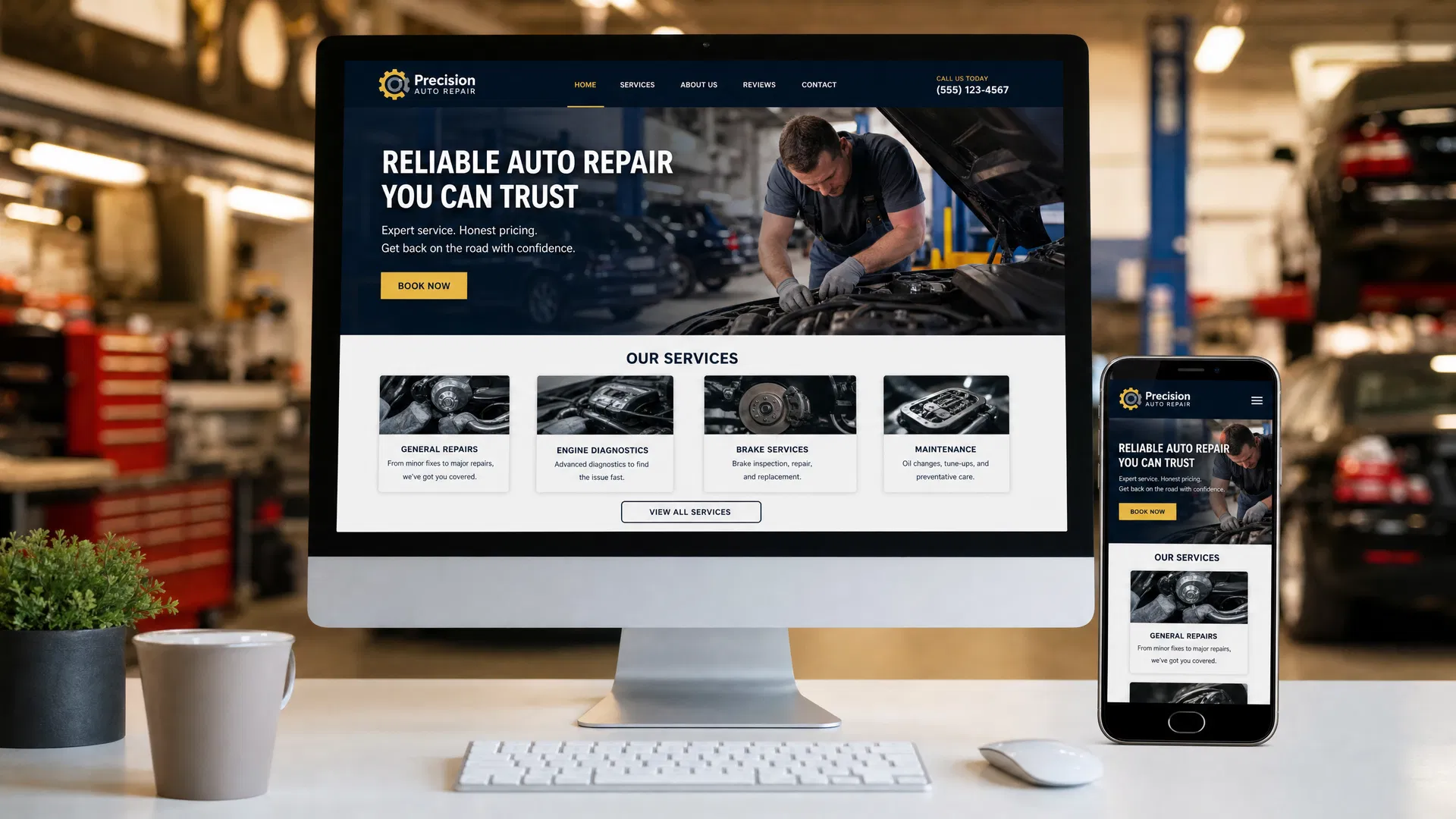
Use one primary action, such as calling or requesting an appointment, and one useful secondary action. Display accurate hours and location information near the decision path.
Individual Service Pages
Create a substantial page for each commercially important service only when the shop genuinely offers it. A useful page explains symptoms, what the service includes, applicable makes or vehicles, common questions, the shop's process and the next step.
Service pages should be written for customers first. Avoid creating near-identical city or keyword pages solely to multiply URLs.
About, Team and Credentials
Show the people and experience behind the business. Approved facts such as years operating, technician credentials, warranties, association memberships and specialist equipment can reduce uncertainty. Do not publish badges, awards or certifications the shop cannot substantiate.
Reviews and Case Evidence
Use approved testimonials and real project examples. Attribute quotes accurately and keep material claims consistent with their source. If a result comes from a multi-channel program, do not present it as proof that a redesign alone caused the outcome.
Contact and Booking
Keep contact forms short and provide a visible phone alternative. If a third-party scheduler is used, test the handoff on mobile and measure a completed booking separately from a click that merely opens the calendar.
Mobile and Accessibility Requirements
Customers should be able to call, read service information and complete a booking without zooming or fighting the interface. At minimum:
- use readable text and strong color contrast;
- provide large, clearly labelled tap targets;
- avoid essential information inside image text;
- give meaningful images useful alternative text;
- make forms operable with labels, keyboard navigation and clear errors; and
- test the header, phone action and booking path at a representative mobile width.
Accessibility and conversion usually reinforce each other: clearer labels and simpler actions help more customers complete the task.
Local SEO and Technical Foundations
The website should support—not duplicate—the shop's Google Business Profile. Keep the business name, address or service-area model, phone, hours and primary services accurate across both.
For every intended search page, verify:
- the URL returns the correct 200 response;
- substantive content and crawlable links are present in the initial HTML;
- title, description, H1 and canonical match the page's purpose;
- internal links point to the preferred URL;
- applicable LocalBusiness, Service, Article or breadcrumb data matches visible content;
- the page is included in the sitemap when appropriate; and
- old URLs redirect directly to the closest replacement during a rebuild.
These requirements make the site easier for conventional search and AI retrieval systems to understand. There is no special AI schema that replaces useful pages and accurate business evidence.
Content Architecture: Avoiding Cannibalization
Assign one owner to each important intent:
- the homepage owns the shop's broad brand and category proposition;
- service pages own searches for the services the shop sells;
- location pages own genuinely distinct market information;
- articles answer research questions and link to the relevant service page; and
- proof pages support decisions without competing with service intent.
When two articles cover the same question, improve the stronger page and consolidate only after reviewing rankings, backlinks and business purpose.
What to Measure After Launch
Track business outcomes before celebrating traffic:
- qualified phone calls;
- completed appointment requests;
- completed forms;
- source and landing page for each lead;
- impressions, clicks and click-through rate by page and query;
- local visibility for priority services; and
- technical performance using field data where available.
Record a pre-launch baseline and annotate the launch date. Search and lead changes can have several causes, so use a reasonable comparison period before attributing an outcome to the new site.
Published Automotive Examples
Auto Shop Digital publishes complete-program evidence in its case-study library:
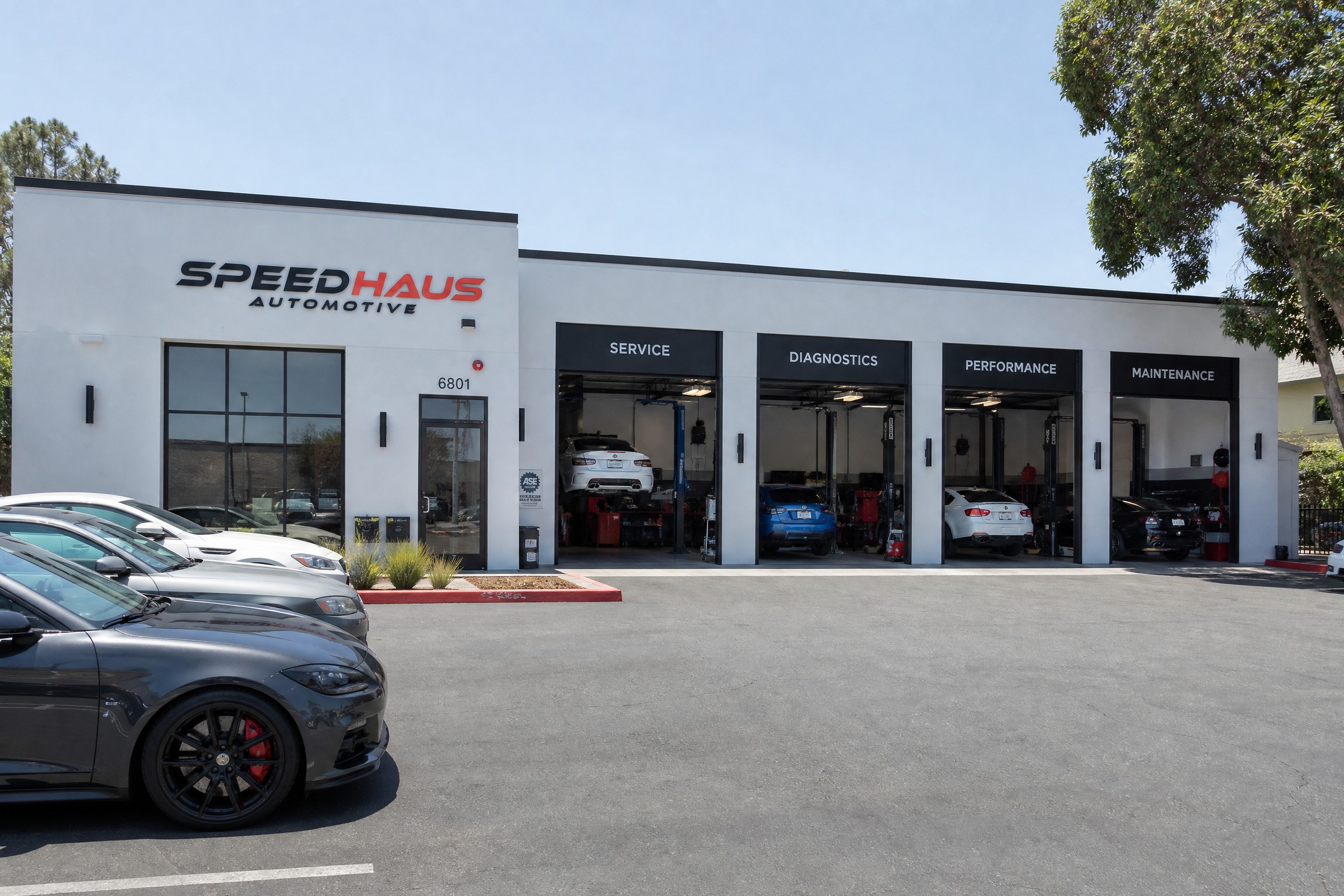
- Speedhaus Automotive documents growth from 15 to 246 monthly organic clicks over 14 months.
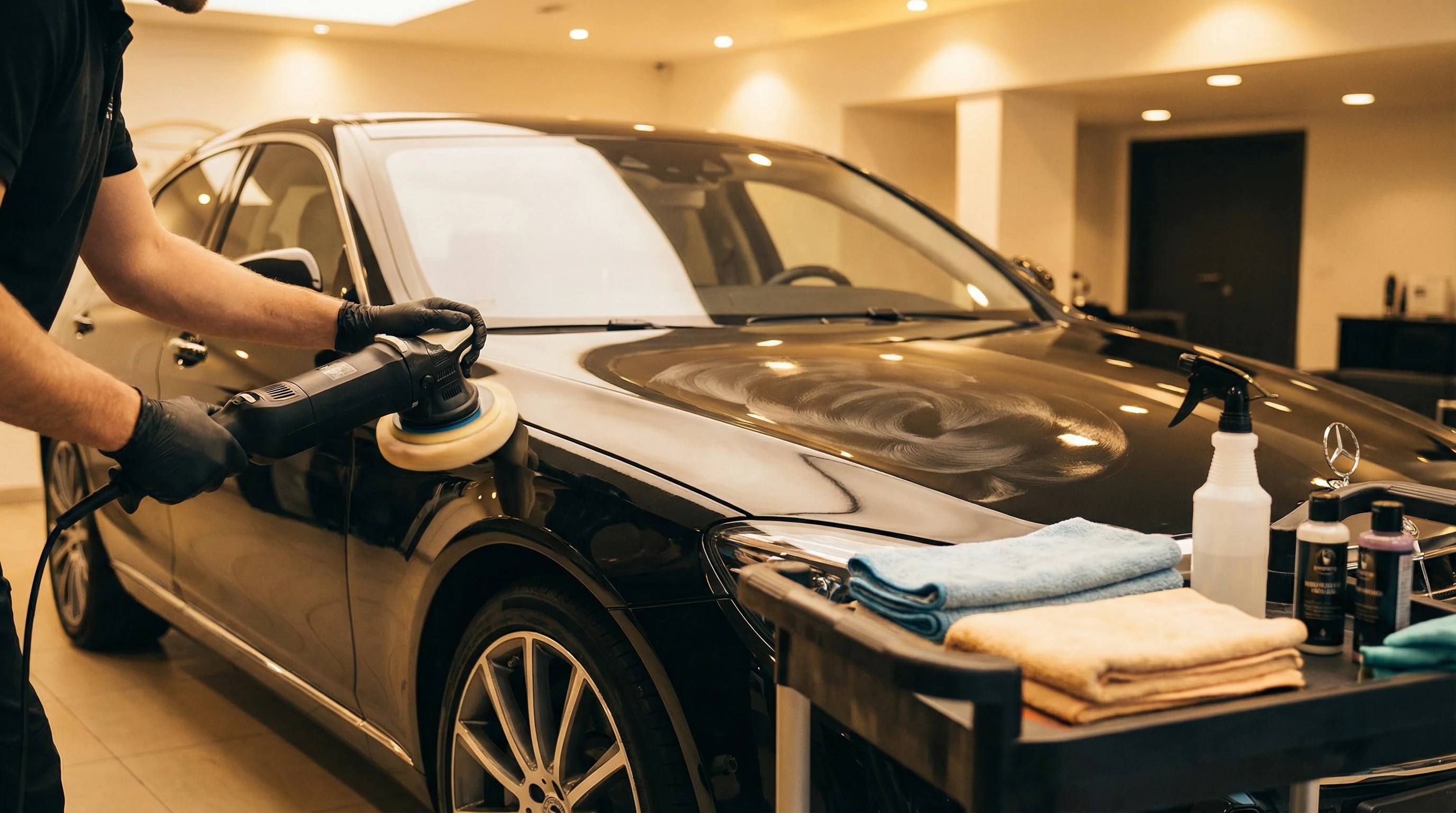
- Doctor Detail documents 4,764 organic clicks and 648,748 impressions over its reporting period.
- Craig's Collision Center documents 265 organic clicks and 32,939 impressions over 12 months.
These are results from managed search, content and website systems—not promises that changing a design will produce the same numbers for another shop.
How Auto Shop Digital Handles Website Builds
A custom Sanity-powered website is included in Foundation when a rebuild is the right strategic choice. If the existing website already meets the technical, SEO, AI-readiness and conversion standard, it is improved instead.
Foundation is $1,250 per month with a six-month initial engagement, then month-to-month with 30 days' written notice. Review the current pricing and scope before making a decision.
FAQ: Auto Repair Website Design
What pages should an auto repair website include?
Most shops need a homepage, individual priority service pages, an about or team page, approved reviews or proof, and a contact or booking page. Add location and educational pages only when they provide distinct customer value.
Should every repair service have its own page?
Important services generally deserve their own useful page. Do not create thin pages for services the shop rarely performs or duplicate pages that differ only by a keyword or city name.
Should I rebuild my current website?
Rebuild when the existing platform or architecture prevents reliable mobile use, search delivery, accurate content management, measurement or conversion improvements. If the current site is sound, targeted improvements may be faster and less disruptive.
How long does Auto Shop Digital take to build a website?
Most builds are planned for approximately four to six weeks from kickoff, subject to scope, approvals, integrations and the availability of accurate content and visual assets.
Is website design included in Foundation?
Yes. A custom website is included when a rebuild is strategically appropriate. Foundation starts at $1,250 per month with a six-month initial engagement; there is no separate website setup charge.
Next Step
Use this checklist to review your current site, then compare it with the website design capability included in Foundation. A strategy call should begin with the evidence and determine whether your site needs focused improvements or a full rebuild.