TL;DR: Running profitable auto shop ads in 2026 requires four core channels — Google Search, Local Service Ads, Meta, and local SEO — combined with accurate call tracking, service-specific landing pages, and a 90-day optimization mindset. This guide gives you the exact structure, budgets, and timelines to fill your bays with the right customers.
Auto Shop Ads: A Practical Guide To Filling Your Bays With The Right Customers
This is a practical 2026 guide to creating profitable auto shop ads for independent repair shops — not generic marketing theory. If you're tired of throwing money at campaigns that don't deliver measurable results, you're in the right place.
Why Your Auto Shop Ads Might Not Be Working
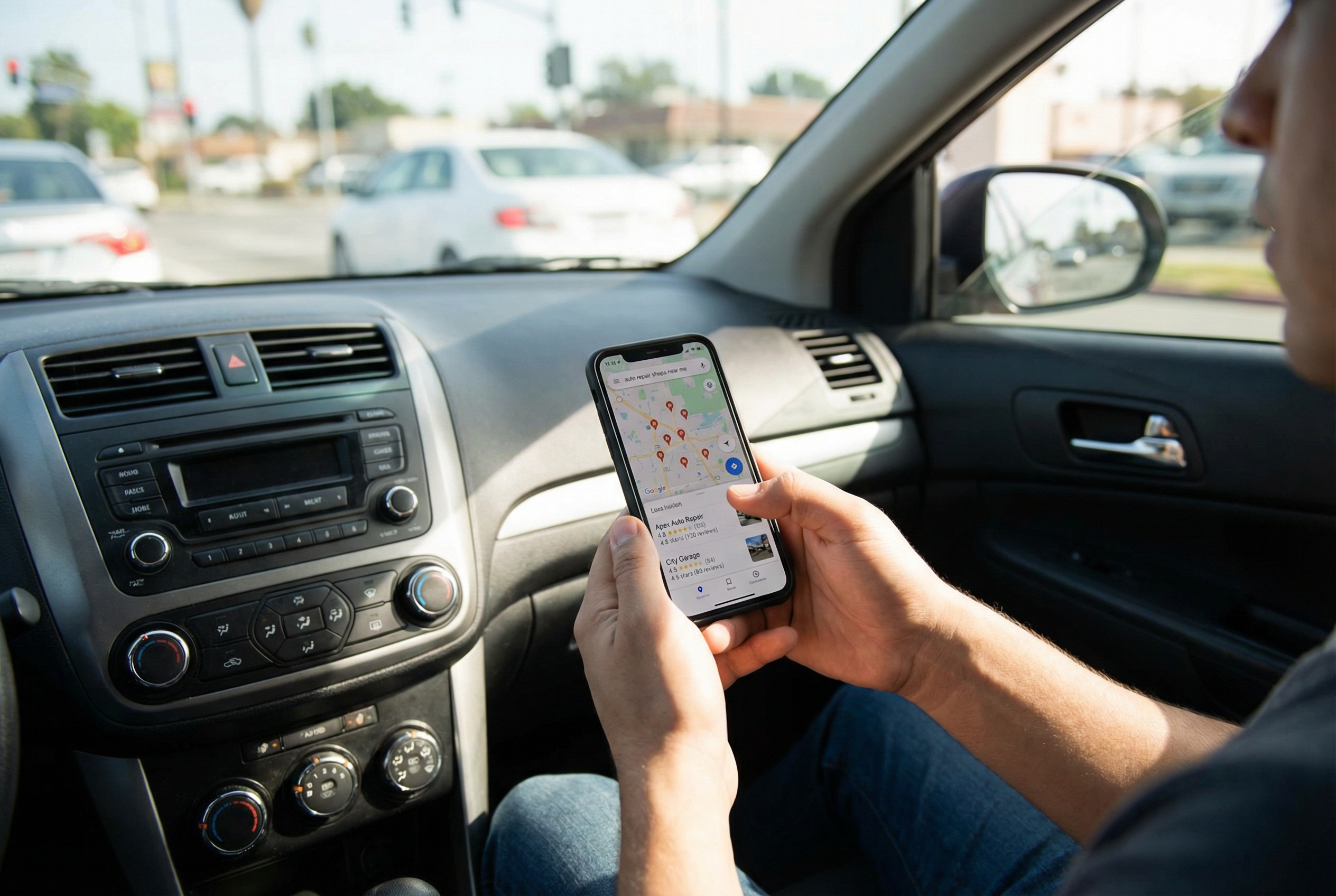
The auto repair business has changed dramatically. Click costs have risen, more competitors are advertising online, and customers now compare multiple shops on Google before picking up the phone. Over 85% of people use the internet to find local auto shops, which means if your digital presence is weak, you're invisible to potential customers.
Here's why most shops' ads underperform:
| Common Problem | Why It Hurts |
|---|---|
| Generic "auto repair" keywords | You pay $12–$18 per click for people who may need anything from an oil change to transmission repair |
| All traffic goes to homepage | Visitors can't quickly find the specific services they searched for |
| No call tracking | You can't determine which ads generated revenue versus which wasted money |
| Single monolithic campaign | No way to optimize budget toward high-performing services |
| No negative keywords | You pay for clicks from people searching "DIY brake repair" or "auto repair jobs" |
Consider a shop running one broad campaign for "auto repair" in Dallas. They're paying premium rates per click but have no idea which calls came from which ad. They can't tell if brake repair ads are profitable while AC ads lose money. This blind spending continues month after month.
The rest of this article shows exactly how to fix these issues with specific ad structures, offers, and tracking setups.
Core Auto Shop Advertising Channels You Should Focus On
Not every channel works equally well for every repair shop, but four platforms have proven essential for most independents in 2026. These should form the backbone of your auto repair marketing strategy [blocked].
The core four channels:
- Google Search Ads – Captures customers actively searching for car repair services right now
- Google Local Service Ads (LSA) – Pay-per-lead model with Google Guaranteed trust badges
- Meta (Facebook/Instagram) – Awareness campaigns and retargeting to stay top-of-mind
- Website + Local SEO – Your foundation that makes all paid ads more effective
Secondary channels like Nextdoor, Waze, and local radio can complement these but shouldn't replace them. Different platforms serve different purposes, and the sections below break down exactly how to structure campaigns for each.
Building a Solid Foundation: Website, Google Business Profile, and Reviews
All ads perform better when the destination looks trustworthy and makes contacting the shop effortless. Before spending money on traffic, fix the foundation.
Website Essentials
What a modern auto shop website needs in 2026:
- Click-to-call phone number prominently in the header (not buried in the footer)
- Online appointment booking form
- Recent reviews from 2024–2026 displayed on the site
- Dedicated service pages for brakes, AC, diagnostics, tires, and electrical work
- Clear "About the shop" section establishing credibility and local roots
- Direct link to your Google, Yelp, or Google Maps review page on your website and in follow-up communications
Optimizing Your Google Business Profile
Your Google Business Profile directly impacts visibility in Google Maps and search results. Ensure it includes correct NAP (name, address, phone), real shop photos taken this year, accurate business hours, and a comprehensive list of specific services like "Timing belt replacement," "Hybrid battery service," and "Wheel alignment." Set your service area radius accurately by ZIP code.
Our Managed Google Business Profile service [blocked] handles all of this for you at $495/month — no setup fees, cancel anytime.
Review Strategy That Works
Aim for 75–150 Google reviews with a 4.6+ rating. Star ratings and review volume heavily influence where you appear in local search. Ask every customer for a review within 24 hours via SMS — the closer to the service, the higher the response rate. Reply thoughtfully to both positive and negative feedback. Professional responses to criticism demonstrate trustworthiness to future customers reading those reviews.
Strong reviews feed directly into LSA visibility and help build trust with local customers who've never heard of your shop.
Designing High-Intent Google Search Ads For Auto Repair
Google Ads remain the fastest way in 2026 to reach high-intent customers already searching for "brake repair near me" or "check engine light diagnostic." Visitors arriving via pay-per-click advertising are 50% more likely to make a purchase compared to other traffic sources.
Campaign Structure That Works
Build separate campaigns for each high-value service category:
- Campaign 1: Brake repair (brake pads, rotors, brake inspection)
- Campaign 2: Engine diagnostics (check engine light, CEL, engine warning)
- Campaign 3: AC repair (car AC not cooling, AC recharge, AC compressor)
- Campaign 4: Oil change (oil change near me, synthetic oil change, quick lube)
- Campaign 5: Tires (tire rotation, flat tire repair, new tires near me)
This structure lets you allocate budget by profitability, not just volume. Brake jobs typically have higher average repair orders than oil changes — your budget should reflect that.
Ad Copy That Converts
High-performing auto repair ad copy includes:
- Headline 1: Service + city ("Brake Repair in Austin")
- Headline 2: Differentiator ("Same-Day Service · ASE Certified")
- Headline 3: Offer or trust signal ("4.8 Stars · 300+ Reviews")
- Description: Specific benefit + call to action ("Get your brakes inspected free. Book online in 60 seconds.")
Use call extensions, location extensions, and sitelink extensions pointing to specific service pages. These increase click-through rates by 10–15% on average.
Bidding Strategy
Start with manual CPC bidding or "Maximize clicks" with bid caps. Only switch to "Maximize conversions" after conversion tracking is properly configured and generating data. Without reliable conversion signals, the algorithm makes poor decisions.
Check your search terms weekly. Add negative keywords when you spot irrelevant queries eating budget. Shift money toward ad groups producing calls and form fills. Pause keywords that generate clicks without conversions.
Leveraging Google Local Service Ads (LSA) For Trust and Leads
Local Service Ads appear at the very top of search results for queries like "mechanic near me" and "auto repair shop open now." They display a "Google Guaranteed" badge that signals trustworthiness to local customers.
Key differences from standard search ads: LSAs operate on a pay-per-lead model — you only pay when someone contacts you, not for clicks. This makes them especially effective for emergency-style services: no-start diagnostics, same-day car repair, and towing coordination.
Basic LSA setup steps:
- Complete background checks and license/insurance verification
- Define your service area by ZIP code
- Select specific services (Engine repair, Oil change, Transmission diagnosis)
- Upload real shop photos and maintain profile completeness
Your star rating and response time heavily influence LSA visibility and lead generation volume. Maintain an aggressive review strategy specifically for your LSA profile. Track each call outcome — booked job, price shopper, wrong number — so you can decide whether to expand or reduce your service list and budget. Most shops find LSAs deliver some of their highest-quality leads.
Using Facebook and Instagram Ads To Stay Top-of-Mind
Meta ads excel at awareness and nurturing rather than capturing immediate "car broke down" intent like Google. Think of Facebook advertising as planting seeds with more customers who will eventually need service.
Two main strategies:
- Prospecting – Reaching new local car owners who may not know your shop exists
- Retargeting – Following up with people who visited your website or engaged with your page in the last 30–90 days
Targeting setup: Use location-based targeting within 5–8 miles of your shop's ZIP code. Layer interests like "car maintenance," "truck owners," or specific vehicle brands you specialize in.
Seasonal campaign ideas that attract customers:
- AC tune-up ads before summer hits
- Winter tire and battery checks in colder states (October–November)
- Back-to-school vehicle safety inspections in August–September
- Free oil change promotion during slow months
Video ads — shop tours, a tech explaining brake warning signs, the owner introducing the business — often outperform static images in 2024–2026. They deliver authenticity that stock photos can't match.
Facebook Ad Creative and Offers That Actually Get Bookings
Use real shop photos from 2023–2026 showing your bays, front counter, and technicians. This builds authenticity that resonates with clients seeking honest work.
Offers that convert:
- $25 off first-time customer repair over $250
- Free brake inspection with no obligation
- Free second-opinion estimate on written quotes from competitors
Keep ad copy simple and local. Mention your city or neighborhood name, typical turnaround time, and warranty on parts and labor. Add social proof: "Over 400 five-star Google reviews since 2019" or "Family-owned in Spokane since 2012."
Local SEO and Organic Visibility To Reduce Long-Term Ad Costs
While pay-per-click can bring leads in days, local SEO compounds over months. As rankings improve, your cost per lead drops because organic traffic is free.
On-page SEO basics: Create unique service pages for brakes, tires, alignments, AC, electrical, and diagnostics. Include city + service in titles and headings. A page titled "Brake Repair in Houston | [Shop Name]" signals relevance to both Google and searchers.
Off-page factors that matter:
- Consistent citations on Yelp, Yellow Pages, and industry directories
- Local backlinks from chambers of commerce, car clubs, and partner businesses
- Active Google Business Profile with regular posts and photo updates
Ongoing content strategy: Publish helpful blog posts like "What to do if your check engine light comes on in Houston" or "How often to rotate tires in snowy climates." This builds topical authority and captures long-tail search traffic.
Strong SEO makes all paid ads more effective. When searchers see your brand in ads, Google Maps, and organic results simultaneously, they're more likely to choose you over competitors appearing in only one place.
For a complete SEO strategy, see our guide on auto repair shop SEO [blocked].
Tracking, Measuring, and Improving Your Auto Shop Ads
Ad platforms provide detailed data, but shops must set up tracking correctly to know what's actually profitable versus what just looks busy.
Essential tracking setup:
- Call tracking numbers — unique numbers per campaign so you know which ads generate calls
- Google Analytics 4 — track form submissions and appointment bookings as conversions
- Google Ads conversion tracking — import GA4 goals so the algorithm optimizes toward real leads
- UTM parameters — tag every ad URL to track source, medium, and campaign in GA4
Key metrics to review weekly:
- Cost per call by campaign and ad group
- Call-to-appointment conversion rate (track in your shop management software)
- Cost per booked job (not just cost per click)
- Search impression share — are you losing visibility to competitors?
Customer Loyalty and Retention
Email marketing is your secret weapon for retention that 90% of shops completely ignore. Use it to strategically remind customers exactly when their next service is due — whether it's a brake inspection or scheduled maintenance. Personalized reminders keep your shop permanently top-of-mind and systematically fill your calendar with repeat appointments, dramatically reducing your reliance on expensive ad spend.
Local SEO dominance also plays a game-changing role in customer retention. By aggressively optimizing your website and Google Business Profile for specific services and local keywords, your shop appears more prominently than competitors in search results, making it effortless for satisfied customers to find you again and again.
Building ironclad trust is the foundation for converting one-time visitors into loyal clients for life. Showcase overwhelming social proof by strategically featuring customer reviews and testimonials across your website and Google Business Profile. Systematically encourage happy clients to leave reviews after each visit — word of mouth amplified online is the most powerful driver of new customers.
Planning Your Auto Shop Advertising Budget and Timeline
Set realistic expectations: new shops or those new to digital ads should plan at least 90 days of consistent spend before judging overall performance. Algorithms need time to learn, and you need data to optimize.
Example monthly budget ranges by shop size:
| Shop Type | Monthly Budget |
|---|---|
| Solo-bay startup | $500–$1,000 |
| 3–5 bay shop | $1,500–$3,000 |
| Multi-location operation | $5,000+ across locations |
Seasonality affects both cost and opportunity. Competition and demand spike in late spring and summer for AC work. Northern states see pre-winter rushes for tires and batteries. Plan budgets accordingly.
Prioritize spend in this order:
- Google Search Ads and LSA for high-intent lead generation
- Facebook/Instagram for awareness and retargeting
- SEO content that compounds visibility over time
Set clear goals before spending money. Examples: "Add 40 new brake jobs per month by Q4 2026" or "Increase monthly ARO by 15% through more diagnostic work." These benchmarks tell you whether your strategy is working.
Putting It All Together: A Simple 90-Day Auto Shop Ads Plan
The pieces fit together as a system: solid foundation, high-intent search ads, trust-building LSAs, nurturing social ads, and accurate tracking. None work as well in isolation as they do together.
90-Day Roadmap:
Days 1–15: Fix website basics and optimize your Google Business Profile. Ensure click-to-call works, service pages exist, and reviews are visible. This is your foundation — don't skip it.
Days 16–30: Launch 1–2 Google Search campaigns focused on high-value services like brakes or diagnostics. Set up Local Service Ads. Install call tracking on every campaign.
Days 31–60: Add Facebook retargeting to re-engage site visitors. Refine keywords based on search term reports. Start building negative keyword lists aggressively.
Days 61–90: Optimize based on call volume and job data. Scale what's working. Pause underperforming ad groups. Test new offers on your best-performing campaigns.
Focus on one or two services first — trying to market everything simultaneously spreads your budget too thin for meaningful results.
Profitable auto shop ads aren't built on luck. They're built on data, structure, and consistent tweaking. Track every lead, refine every week, and compound your results over time. The shops that commit to this process don't just survive — they dominate their local markets.
Frequently Asked Questions
How much should I budget for auto shop Google Ads? Start with $500–$1,000/month for a solo-bay shop, $1,500–$3,000 for a 3–5 bay operation. Focus on 1–2 high-value service campaigns before expanding. Expect 60–90 days before the algorithm fully optimizes.
Are Local Service Ads worth it for auto repair shops? Yes — LSAs are pay-per-lead, not pay-per-click, which means you only pay when someone actually contacts you. The Google Guaranteed badge also builds immediate trust. Most shops find LSAs deliver their highest-quality leads.
What's the best offer to run in Facebook ads for auto repair? Free inspections (brake, tire, battery) with no obligation consistently outperform discount offers. They lower the barrier to entry and get customers into your shop where you can build trust and present repair recommendations naturally.
How do I know which ads are actually generating revenue? Install call tracking numbers unique to each campaign, set up Google Analytics 4 conversion tracking for form submissions, and cross-reference ad data with your shop management software. Cost per booked job — not cost per click — is the metric that matters.
Should I hire an agency or manage auto shop ads myself? DIY is viable with 3–5 hours per week and a willingness to learn. Agencies make sense when your time is better spent running the shop and when ad spend exceeds $2,000/month. Look for agencies with automotive-specific experience — generic digital agencies often miss the nuances of local repair shop marketing.
If you'd rather have experts handle your digital marketing while you focus on fixing cars, Auto Shop Digital [blocked] offers fully managed local SEO [blocked], Google Business Profile management [blocked], Google Ads management [blocked], and automotive website design [blocked] built specifically for auto repair shops. You may also find our guides on automotive advertising agencies [blocked] and auto repair marketing tips [blocked] useful as you build your advertising strategy.