TL;DR: Automotive digital services — from remote diagnostics and OTA updates to digital retailing and AI-driven marketing — are no longer optional for dealers and OEMs. This guide covers the full landscape of connected vehicle technology, responsive marketing strategies, and the opportunities and challenges shaping the industry through 2034.
Automotive Digital Services: Your Complete Guide to the Connected Vehicle Revolution
The automotive industry is undergoing a fundamental transformation. Vehicles are no longer just mechanical products — they're software-defined platforms generating continuous data streams that reshape how dealers, OEMs, and service providers operate and engage customers.
This guide covers the full scope of automotive digital services: what they are, how they're used, and what the competitive landscape looks like through the mid-2030s.
What Are Automotive Digital Services?
Automotive digital services encompass the full range of technology-enabled solutions that connect vehicles, customers, dealers, and manufacturers through digital platforms. Here are the main types available today:
| Service Category | Description |
|---|---|
| Remote Diagnostics & Telematics | Proactive health monitoring of vehicle components to predict failures before they happen |
| Over-the-Air (OTA) Updates | Remote software updates for vehicle systems without dealership visits |
| Infotainment Systems | In-vehicle entertainment, navigation, and connectivity features |
| Smart Manufacturing | Digital tools and IoT for efficient vehicle production and quality control |
| Connected Car Features | Real-time traffic, navigation, and remote vehicle controls |
| Mobility-as-a-Service (MaaS) | App-based ride-sharing, car subscriptions, and multimodal transport |
| Digital Retailing | Online vehicle customization, purchasing, and parts distribution |
| Predictive Maintenance | AI-driven systems that forecast and schedule maintenance |
| Online Booking & Reminders | Automated appointment scheduling and notifications |
| Advanced Driver Assistance Systems (ADAS) | AI-powered safety features like emergency braking and lane monitoring |
| Virtual Showrooms & Configurators | Online tools for vehicle customization and virtual test drives |
| Fleet Management Solutions | GPS tracking, route optimization, and driver behavior monitoring |
| Digital Vehicle Inspections (DVI) | Technician-recorded inspection results shared digitally with customers |
Knowing the Automotive Customer in a Digital Era
Data from connected cars, dealer CRMs, and online customer journeys is profoundly reshaping how businesses understand their customers. Telematics streams — mileage, driving style, service alerts — enable hyper-personalized interactions that weren't possible five years ago. This data powers everything from preemptive service reminders to precisely timed trade-in offers.
Customer segmentation for dealers and OEMs operates across multiple dimensions:
| Segmentation Type | Categories | Marketing Application |
|---|---|---|
| Vehicle Lifecycle | New buyer, in-warranty, post-warranty | Onboarding tutorials, recall campaigns, extended warranty pitches |
| Usage Pattern | Commuter, fleet, ride-hailing | Efficiency tips, route optimization, uptime focus |
| Digital Behavior | App users, website visitors, social followers | Channel preference targeting |
Telematics data reveals actionable nuances. High-mileage patterns signal warranty upsell opportunities. EV owners receive home-charger promotions based on charging habits. Aggressive braking patterns indicate training needs for fleet drivers. With 19.6 million U.S. vehicles maintaining active connected service subscriptions, the datasets available for segmentation are massive.
Practical tools make this work: dealer management systems (DMS) integrate with CRMs for unified profiles, marketing automation platforms handle drip campaigns, and analytics dashboards visualize engagement. Consent-based collection ensures compliance with GDPR in Europe and CCPA in California — non-negotiable requirements for data security and customer trust.
Responsive Digital Marketing for Dealers and OEMs
A responsive marketing model adapts campaigns in near real-time based on engagement data. Rather than setting and forgetting, dealers adjust email subject lines, SMS timings, and social ad creatives daily based on metrics like open rates exceeding 25%, click-through rates above 2–3%, and form completion conversions.
Here's how it works in practice. A spring service campaign starts with general oil change messaging. Within the first week, data shows:
- Commuter segments have low engagement
- High-mileage drivers respond better to brake inspection offers
- Evening SMS delivers higher open rates than morning
The campaign pivots. Creative assets and channel mixes change weekly to optimize response rates — achieving up to 40% higher performance than static approaches.
Key tactics include:
- A/B testing: Compare "Book Now for 20% Off" versus personalized "Your Tesla Needs Service Soon"
- Dynamic content: Insert vehicle-specific details automatically
- Retargeting: Use Google Ads or Meta pixels to recapture website abandoners with lease renewal prompts
KPIs drive accountability: cost per lead targets under $50, booked appointments track 10–15% show rates, and attribution models link digital touchpoints to vehicle sales. Multi-location groups use platform-wide data to standardize yet localize campaigns, achieving 20–30% uplift in service revenue per vehicle in operation.
Creatives and Omnichannel Customer Experience
Average automotive creatives face 90%+ ignore rates in saturated feeds and inboxes. Static banners and generic emails simply don't cut through the noise. Customers scroll past hundreds of ads daily — yours needs to stop them.
High-impact creative elements that work:
- Personalized videos showing a customer's exact vehicle model with service reminders
- Real technician photos and shop walkthroughs (authenticity beats stock photography)
- Interactive configurators embedded in email campaigns
- SMS with direct booking links (not just "call us")
An omnichannel approach ensures consistent messaging across every touchpoint: website, email, SMS, social media, in-app notifications, and in-dealership digital displays. Customers who receive consistent cross-channel messaging convert at 3× the rate of those reached through a single channel.
In-Vehicle Digital Services: The Connected Car Experience
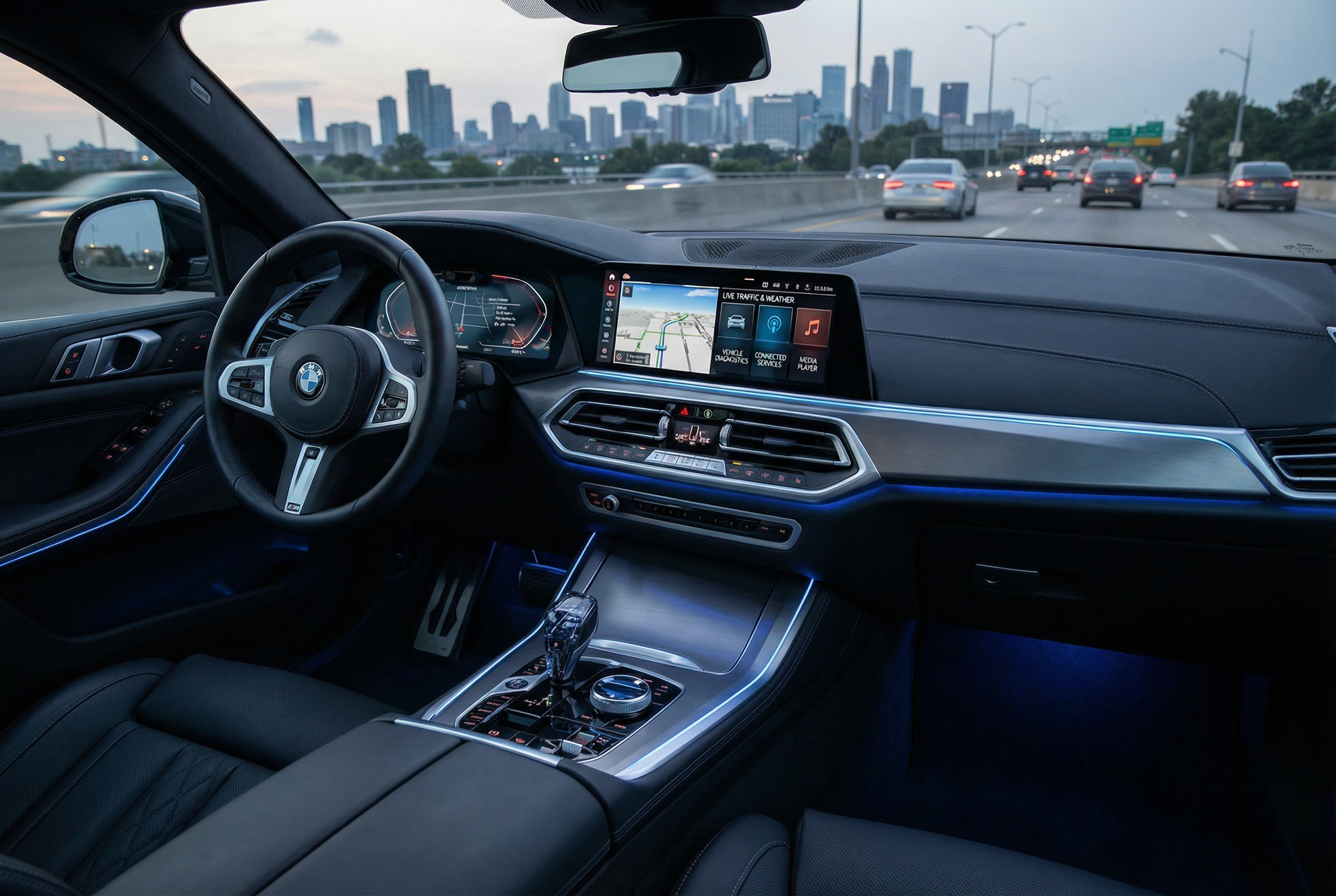
Modern vehicles are sophisticated digital platforms. You've got everything from smart navigation and live entertainment to top-notch security and remote diagnostics — all working together seamlessly in your vehicle's infotainment system.
As the automotive world shifts toward software-first thinking, these digital services aren't just nice-to-have features anymore. They're essential for delivering the convenience, safety, and personalized experiences that today's consumers expect.
Proactive Maintenance
AI and advanced analytics continuously monitor vehicle components, giving drivers a heads-up about potential problems before they turn into expensive breakdowns. This proactive approach extends vehicle lifespans and supports service models that work for everyone. Over-the-air software updates let manufacturers push new features, fix bugs, and boost security without requiring a dealership visit.
Role in Electric and Autonomous Vehicles
The integration of digital services becomes absolutely critical for electric and autonomous vehicles. These advanced vehicles depend on robust digital platforms to handle everything from battery health and charging optimization to autonomous driving functions. Industry leaders are pouring serious investment into innovative solutions designed specifically for electric and autonomous vehicles — from AI-powered route planning to predictive maintenance built for next-generation mobility.
Opportunities, Challenges, and the Road Ahead
Key Opportunities
The opportunity landscape through 2034–2035 is substantial. Recurring subscription revenues, new mobility models, and software-driven differentiation position forward-thinking businesses for significant growth. Industry analysis shows software could generate trillions in revenue by the 2040s — currently just 3% of automaker sales.
- Electric and Autonomous Vehicle Services: Battery analytics, smart charging, and autonomous vehicle software stacks
- Localized Services in High-Growth Markets: Expansion in Asia Pacific and Latin America through tailored digital offerings
- White-Label Solutions: Providing scalable digital platforms for multi-location dealer groups
- Mobility-as-a-Service (MaaS): Growth in app-based ride-sharing, car subscriptions, and multimodal transport options
Primary Challenges
| Challenge | Impact |
|---|---|
| Cybersecurity | Breaches costing $1–2 million per incident |
| Regulatory Fragmentation | Navigating GDPR fines (up to 4% revenue) vs. CCPA opt-outs |
| Development Costs | High investment required ($10–20 billion per platform) |
| Infrastructure Gaps | Especially in emerging markets |
Workforce Implications
Dealers need to retrain approximately 50% of staff in analytics and digital tools. Technicians must understand automotive components alongside software diagnostics. Marketers need to interpret performance data and optimize campaigns continuously.
What This Means for Independent Auto Shops
While much of the connected vehicle revolution is driven by OEMs and large dealer groups, independent repair shops are directly affected by these trends:
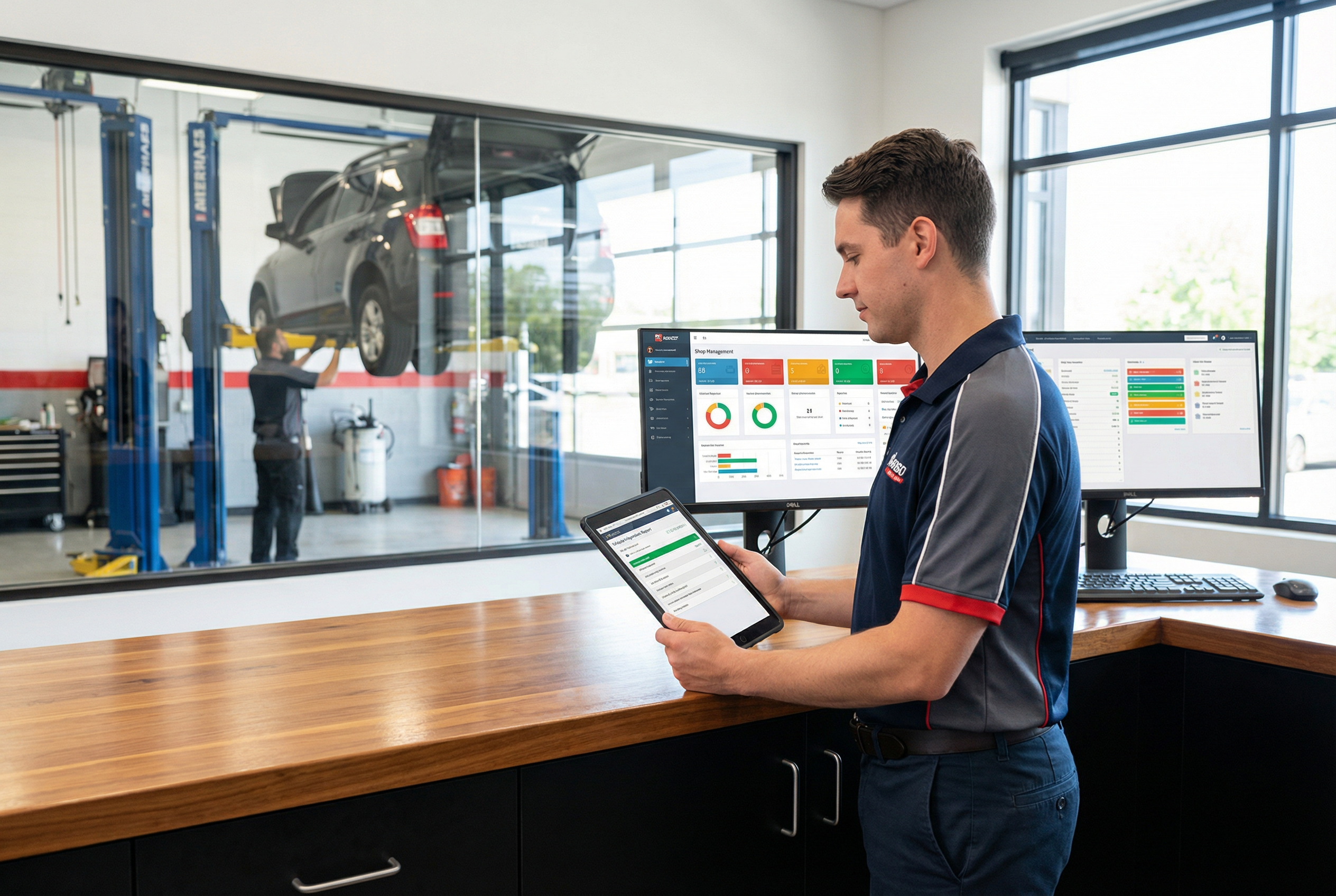
- Digital Vehicle Inspections (DVI) are becoming the customer expectation — shops that send photo/video inspection reports see higher approval rates and customer trust
- Online booking is now table stakes — shops without it lose customers to competitors who make scheduling frictionless
- Google Business Profile optimization drives local visibility in an era where 85%+ of customers search online before visiting a shop
- Review management is more critical than ever — customers rely on ratings and responses when choosing between shops
For independent shops looking to compete in this digital landscape, Auto Shop Digital [blocked] offers managed local SEO [blocked] and Google Business Profile management [blocked] designed specifically for auto repair businesses. See also our guides on auto shop advertising strategies [blocked] and the marketing mechanic framework [blocked] for building a complete digital presence.
Frequently Asked Questions
What are the most important automotive digital services for independent repair shops? For independent shops, the highest-impact digital services are: (1) Google Business Profile optimization for local search visibility, (2) online appointment booking, (3) digital vehicle inspections with photo/video reports, (4) automated review request SMS, and (5) targeted Google Ads for high-value services. These don't require large technology investments and deliver measurable ROI within 60–90 days.
How is telematics data changing automotive marketing? Telematics data enables proactive service outreach — contacting customers when their vehicle data indicates a need rather than waiting for them to call. High-mileage alerts, battery health warnings, and brake wear indicators can all trigger automated service reminders. Dealers using telematics-driven marketing see 20–30% higher service appointment rates compared to time-based reminder campaigns.
What is the automotive digital services market size? The global automotive digital services market is projected to grow significantly through 2034, driven by connected vehicle adoption, EV growth, and software-defined vehicle platforms. Software revenue currently represents approximately 3% of automaker sales but is expected to grow substantially as subscription services, OTA updates, and in-vehicle commerce expand.
How should dealers approach data privacy compliance? Dealers must implement consent-based data collection that complies with GDPR (Europe) and CCPA (California). This means clear opt-in mechanisms, transparent data use policies, and the ability to honor deletion requests. Working with a DMS or CRM provider that has built-in compliance tools significantly reduces legal risk.
What's the ROI on digital vehicle inspections (DVI)? Shops using digital vehicle inspections report 15–25% higher average repair orders compared to verbal-only recommendations. Customers who see photos and videos of their vehicle's issues approve additional work at significantly higher rates. The transparency also builds long-term trust, increasing customer retention and referrals.
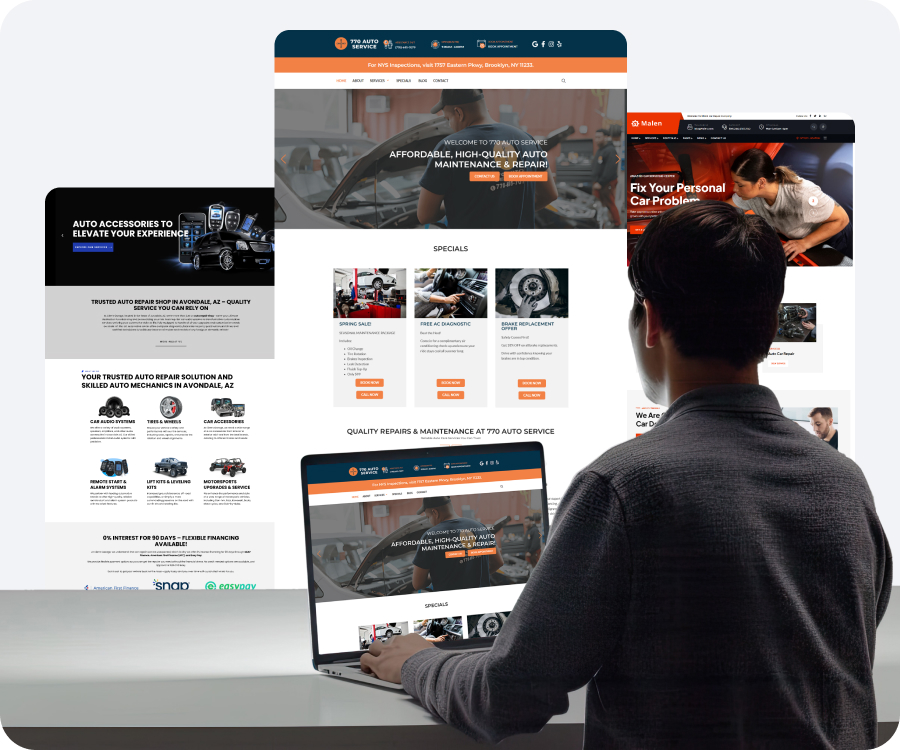
For independent shops ready to put these digital strategies into practice, Auto Shop Digital [blocked] offers fully managed local SEO [blocked], Google Business Profile management [blocked], Google Ads management [blocked], and automotive website design [blocked] built specifically for auto repair shops. See also our guide on auto shop ads [blocked] for a deeper dive into paid advertising channels.