From Dealerships to Repair Shops: Mastering SEO for Auto Businesses
Why SEO for Automotive Industry Businesses Can't Be Ignored in 2025
SEO for automotive industry businesses—from car dealerships to repair shops—is the process of optimizing your online presence so customers find you when they search for vehicles, services, or parts. It involves:
- Local SEO: Optimizing your Google Business Profile and managing reviews to appear in "near me" searches and Google Maps.
- On-Page SEO: Creating fast, mobile-friendly websites with optimized service pages and clear calls-to-action.
- Content Marketing: Publishing helpful content that answers customer questions and builds trust.
- Technical SEO: Ensuring search engines can crawl your site and maintaining site health.
- Link Building: Earning backlinks from reputable sites to boost authority.
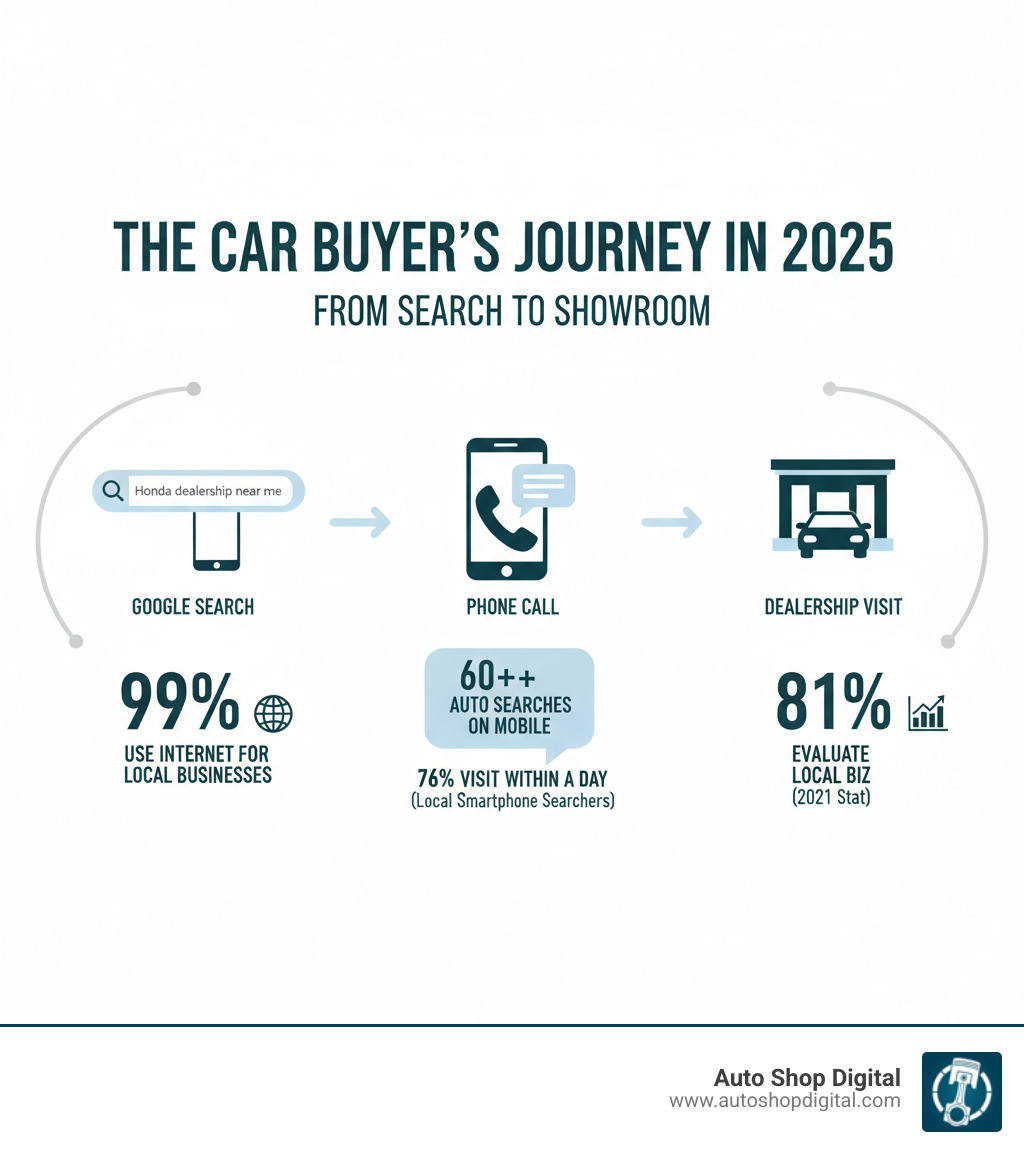
Most car buyers start their journey online. 99% of people use the internet to search for local businesses, and 81% use it to evaluate them. Whether searching for a "Honda dealership near me" or "brake repair in Santa Monica," customers begin on a search engine, usually on their phone.
In fact, over 60% of auto-related searches happen on mobile devices, and 76% of people who search for something nearby on their smartphone visit a related business within a day. Showing up in these searches is a massive opportunity; not showing up is a missed sale.
The challenge is that most auto shop owners and dealership managers are experts in cars and sales, not Google rankings. With technicians, inventory, and customer service to manage, learning SEO is often the last priority. However, your competitors are investing in SEO. Top-ranking shops aren't lucky; they're executing a strategy. Every day you're not visible online, potential customers are finding someone else.
This guide breaks down how SEO works for automotive businesses, covering the tactics that make or break your visibility—all in plain language.
I'm Daniel Harman, Founder and CEO of Auto Shop Digital. With over 15 years helping service businesses, including hundreds of auto shops, I've seen how the right SEO for automotive industry strategy transforms struggling shops into market leaders.
The Foundation: Mastering Local SEO for Automotive Businesses
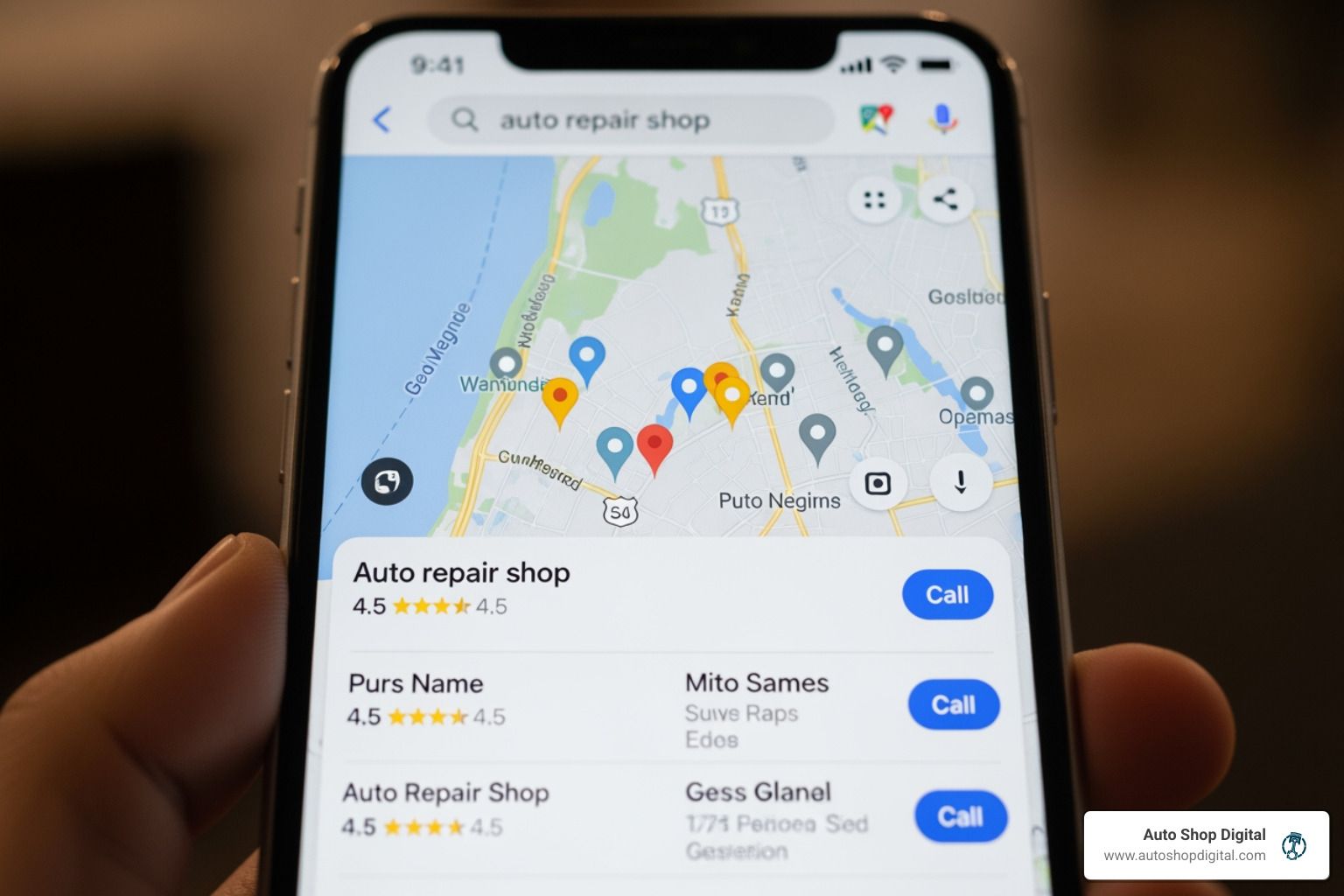
Your customers are local. They're searching for "brake repair near me" or "used cars in Los Angeles" from their phones when they need help now. That's why local SEO for automotive industry businesses is the foundation of your digital strategy.
Google prioritizes local results, especially on Google Maps, for automotive searches. The basics are critical. Your Name, Address, and Phone number (NAP) must be identical everywhere online—your website, Google, Yelp, etc. Inconsistencies hurt your rankings. To succeed, you need a complete local presence: an optimized Google Business Profile, genuine customer reviews, and content that speaks to the neighborhoods you serve.
Optimizing Your Google Business Profile (GBP)
Your Google Business Profile is your most powerful free tool and digital storefront. For many customers, it's their first impression. Don't set it and forget it; your GBP should be an active part of your marketing.

- Business Category: Be specific. Choose "auto repair shop" or "car dealer" as your primary category, then add secondary ones like "tire shop" or "used car dealer."
- Service Area: Clearly define the neighborhoods and cities you serve, like Culver City or Los Angeles County. This helps Google show you to the right people.
- High-Quality Photos: Businesses with photos get 42% more requests for directions. Show off your service bays, team, and showroom. Real photos build trust.
- Google Posts: Share updates, promotions, or new inventory. Regular posts signal to Google that you're active.
- Q&A Feature: Answer customer questions promptly. You can also pre-populate this section with common questions like "Do you offer shuttle service?"
- Service Menu: List all your services (oil changes, brake repair) or departments (new car sales, financing). A complete profile is more likely to appear in relevant searches.
The Power of Customer Reviews and Reputation Management
42% of people regularly check online reviews, especially in the automotive world where trust is paramount. Reviews help you rank on Google and convince customers to call you. A competitor with 200 five-star reviews will get the call over a shop with a 3.2-star average.
Getting reviews is simple: Make it easy. Ask happy customers for a review at pickup and send a follow-up text or email with a direct link.
Respond to every review. Thank positive reviewers by name. For negative reviews, respond quickly and professionally. Acknowledge the issue, apologize, and offer to make it right. A thoughtful response can build more trust than ten good reviews. Our guide on managing negative reviews offers more detail.
Showcase your best testimonials on your website and social media to maximize their impact.
Targeting Location-Specific Keywords
Searches like "transmission repair Long Beach" have high local intent, signaling a customer ready to book an appointment. You need to show up for these searches by weaving your city and neighborhood names into your website content, page titles, and Google Business Profile.
"Near me" searches have exploded. You don't need to add "near me" to your content; Google uses the searcher's location. Strong local signals—a complete GBP, consistent NAP, and local reviews—are what matter.
Get specific with city and neighborhood terms like "serving Santa Monica, Venice, and Marina del Rey." This creates more opportunities to appear in local searches.
The magic formula is combining service keywords with location keywords: "brake repair Santa Monica," "used Honda Civic Los Angeles," or "smog check Marina del Rey." For dealerships, this could be "used cars Los Angeles" or "new SUVs for sale Beverly Hills." Build content and service pages around these valuable phrases.
For more ideas, see our guide on 7 local auto repair marketing ideas. Nailing local SEO makes you the obvious choice for customers in your area.
Building Your Digital Showroom: Website & On-Page SEO Essentials
Your website is your 24/7 digital showroom. It must do more than look good; it needs to load fast, work flawlessly on any device, and provide a great user experience (UX). For SEO for automotive industry businesses, this digital first impression is critical.
Over 60% of auto-related searches happen on mobile devices, meaning most customers are shopping from their phones. A slow or clunky mobile site will lose them instantly. Google's Page Experience signals are a direct ranking factor, meaning a frustrating website actively hurts your search visibility. If your site is outdated, our article on why you need a modern website explains what you're missing.
Creating a Logical Website Structure
A messy website structure is as frustrating as a disorganized dealership lot. A well-organized site helps both visitors and Google's search bots find what they need.
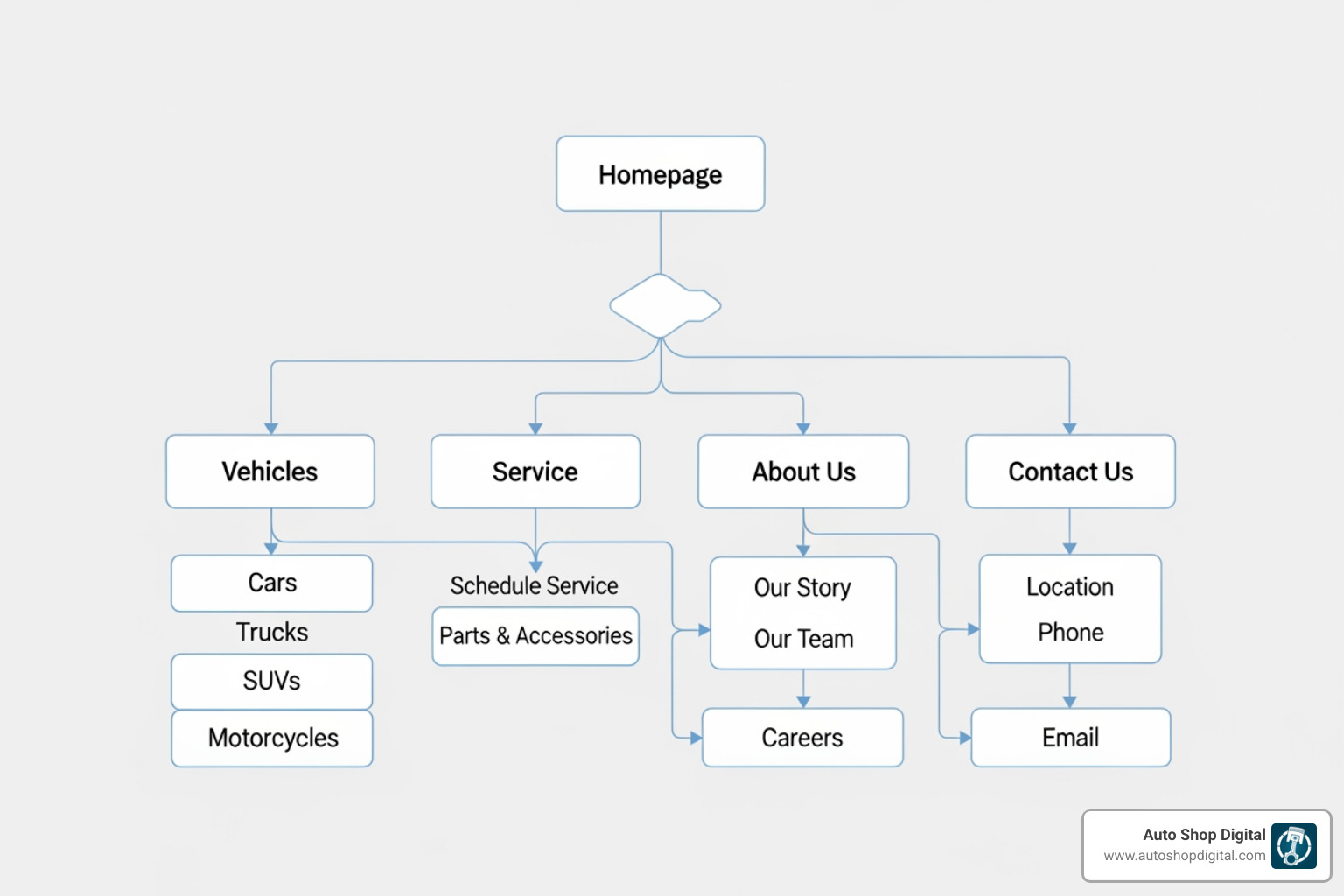
- User navigation should be intuitive, with clear menus and logical categories.
- A silo structure, which groups related content, helps search engines understand your expertise (e.g., all brake service content is linked together).
- Your homepage should direct visitors to key areas, like dedicated service pages("oil change Los Angeles") or organized inventory pages(new, used, CPO).
- If you have multiple locations, each needs a unique location page with local contact info and content.
- Internal linking connects related content, improving user experience and helping search engines understand your site's structure.
Why a Mobile-Friendly and Fast Website is Non-Negotiable
If your website isn't mobile-friendly, you're losing money. Google has made it clear that mobile-friendliness and page speed directly impact rankings.
Core Web Vitals are Google's metrics for user experience, measuring loading speed, interactivity, and visual stability. Poor scores will hurt your rankings. Responsive design, which ensures your site adapts to any screen size, is essential.
Common technical improvements include:
- Image compression: Shrink large image files to improve loading speed without sacrificing quality.
- Caching: Store parts of your site in a visitor's browser for faster loading on subsequent visits.
Use free tools like PageSpeed Insights and WebPageTest.org to check your site's performance. Avoiding common website design mistakes is crucial for retaining customers.
Optimizing Vehicle Detail Pages (VDPs) and Service Pages
Your Vehicle Detail Pages (VDPs) and service pages are where conversions happen. They are critical for both sales and SEO for automotive industry success.
- Unique Titles and Descriptions: Write compelling, unique copy for each vehicle and service. Avoid generic manufacturer descriptions.
- High-Quality Images and Videos: Use professional photos, multi-angle shots, and video walkarounds to build confidence.
- Strong Calls-to-Action (CTAs): Use prominent buttons like "Schedule a Test Drive" or "Book Service Now."
- Comprehensive Details: Provide all relevant information, such as vehicle specs (VIN, mileage, features) or service details.
- Pricing and Financing: Be transparent about pricing and financing options to build trust.
- Customer Reviews: Integrate testimonials directly on these pages to help seal the deal.
Optimizing these pages improves search rankings and creates a better experience that turns browsers into buyers. This is especially important for growing your auto dealership.
Advanced Strategies for the SEO for Automotive Industry
With the fundamentals in place, advanced strategies can help you dominate your local market. These tactics focus on strengthening your E-E-A-T signals—Experience, Expertise, Authoritativeness, and Trust—which Google uses to evaluate quality. As detailed in Google's quality rater guidelines , this framework is about proving you are a trustworthy expert.
Fueling Your Site with High-Quality Content Marketing
Most automotive websites are static. Content marketing answers customer questions and establishes you as an expert, bringing qualified traffic to your site.
- Blogging for Authority: Write articles that answer common customer questions, like "How often should I rotate my tires?" or "Should I buy or lease?" This positions you as a helpful resource.
- Vehicle Comparisons: Guides comparing models like the "Honda Accord vs. Toyota Camry" attract buyers who are deep in their decision-making process.
- Maintenance Guides: Step-by-step articles on topics like "How to Check Your Brake Fluid" build trust. Even if customers don't do it themselves, they'll remember your shop.
- Local Event Coverage: Writing about your participation in local car shows or community sponsorships creates fresh, locally relevant content.
Google's helpful content updates prioritize content created for people, not just search engines. Your content must be genuinely helpful. For more ideas, see our insights on automotive marketing.
Leveraging Video and Schema Markup for Higher Visibility
Video is essential because many customers prefer watching to reading. For SEO for automotive industry businesses, it's a powerful tool for engagement and trust-building.
- Video Walkarounds: A must for dealerships, these let buyers inspect a vehicle from home.
- Testimonial Videos: Seeing a real customer praise your service is more authentic and powerful than written text.
- Service Explainer Videos: A short video explaining a brake inspection can educate customers and position you as an expert. Learn more about how video marketing benefits auto shops.
Schema markup is code that helps search engines understand your content, leading to rich snippets (like star ratings) in search results.
- Vehicle schema tells Google your inventory details (make, model, price).
- Local Business schema provides your address, hours, and phone number.
- Review schema displays your star ratings directly in search results.
- FAQ schema can make your Q&As appear on the search results page.
Combining video and schema makes your listings stand out and improves click-through rates.
Building High-Quality Backlinks
Backlinks are like digital word-of-mouth recommendations that build your site's authority. Focus on quality over quantity; a link from a respected local or industry site is more valuable than hundreds of low-quality links.
- Local Sponsorships: Sponsoring a local team or event often earns a valuable link from a trusted community organization's website.
- Automotive Blogs and Publications: Offer to write a guest article for a local automotive blog to share your expertise and get a link back to your site.
- Industry Associations: Membership in a chamber of commerce or automotive trade group often includes a directory listing with a link. Consider joining trade organizations relevant to your business.
- Unlinked Brand Mentions: Find mentions of your business name online and politely ask the publisher to add a link.
Building links requires patience and authenticity. Focus on earning links naturally to achieve sustainable growth in your rankings.
The Nuts and Bolts: Technical SEO, AI, and Measuring Success
Technical SEO is the engine of your website. While you don't need to be a programmer, understanding the basics is crucial for SEO for automotive industry success. Free tools like Google Search Console are invaluable for monitoring how Google sees your site and identifying issues.
Key Technical SEO Elements for Automotive Websites
These technical elements ensure your site runs smoothly for users and search engines.
- XML Sitemaps: A roadmap for Google to find and index all your important pages.
- Robots.txt file: Tells search engines which pages to ignore, like admin areas.
- HTTPS Security: Encrypts user data, builds trust, and provides a slight ranking boost.
- URL Structure: Should be clean and descriptive (e.g.,
yourshop.com/brake-repair-santa-monica). - Duplicate Content: Avoid using generic manufacturer descriptions on VDPs to prevent confusing Google.
- 404 Errors: Regularly fix broken links to improve user experience and site health.
Getting these elements right is a core part of any effective automotive digital marketing strategy.
The Role of AI in Automotive SEO
AI is a practical tool that is changing automotive SEO by handling time-consuming analysis, allowing you to focus on strategy.
- Keyword Research: AI tools can quickly identify emerging trends and long-tail keywords, like "hybrid battery replacement Culver City."
- Content Idea Generation: AI can analyze online queries and forums to suggest blog topics your customers are searching for.
- Competitive Analysis: AI tools can rapidly analyze competitors' top keywords, backlink sources, and content strategies to reveal opportunities.
- Schema Markup: AI can generate correct schema code for vehicles, local business info, and reviews, reducing errors. Tools like Writesonic's SEO AI agent can even scan your site and suggest improvements.
AI doesn't replace human expertise—it amplifies it.
Measuring SEO ROI and Understanding Costs
Measuring SEO ROI is essential to justify the investment. The data tells a clear story when tracked correctly.
- Google Analytics Goals: Track key actions like form submissions ("schedule a test drive") or quote requests.
- Call Tracking: Use dedicated phone numbers for organic search traffic to attribute calls directly to your SEO efforts.
- Cost Per Lead: Once you track leads, you can calculate your cost per lead. If you invest $2,000/month in SEO and get 40 leads, your cost per lead is $50.
SEO is a long-term investment that compounds over time. Here are typical monthly investment ranges:
- Basic Local SEO: $500 - $1,500 for small shops in less competitive areas.
- Comprehensive Regional SEO: $1,500 - $3,000 for larger shops or dealerships in cities like Santa Monica or Long Beach.
- Advanced Enterprise SEO: $3,000+ for multi-location businesses in highly competitive markets like Los Angeles.
Costs are driven by business size, market competition, and the scope of services. While initial improvements can appear in weeks, substantial traffic growth typically takes three to six months. SEO is a marathon that builds a sustainable competitive advantage.
Frequently Asked Questions about SEO for the Automotive Industry
Here are answers to common questions about SEO for the automotive industry.
What are the most important ranking factors for car dealership websites?
For competitive markets like California, several factors are critical for ranking on Google:
- Local Signals: A fully optimized Google Business Profile, a steady stream of positive reviews, and consistent NAP (Name, Address, Phone) information are paramount.
- On-Page Factors: A fast, mobile-friendly website is essential, as over 60% of auto-related searches happen on mobile devices. Relevant keywords should be naturally included in your content, titles, and descriptions.
- Website Authority: Quality backlinks from reputable automotive and local websites signal to Google that your site is trustworthy.
- User Behavior: Google rewards sites that users engage with, measured by click-through rates, low bounce rates, and time spent on pages.
- E-E-A-T Signals: Demonstrating your Experience, Expertise, Authoritativeness, and Trustworthiness through high-quality content and a strong reputation is increasingly important.
How long does it take to see results from automotive SEO?
Typically, you can expect to see initial results from SEO for automotive industry efforts within three to six months. This is the general timeframe for Google to recognize and reward consistent optimization.
- Local SEO can be faster: Optimizing your Google Business Profile and actively gathering reviews can improve local rankings within a few weeks to a couple of months.
- SEO has a compounding effect: Over time, your site builds more authority, content, and backlinks, leading to sustainable, long-term growth. Unlike paid ads, organic rankings don't disappear when you stop paying.
- Factors influencing the timeline include your website's current health, market competition, and the resources invested.
SEO is a long-term strategy, not a quick fix. Patience and consistent effort are required for significant growth.
What is the difference between short-tail and long-tail keywords in automotive SEO?
Understanding the difference between these keyword types is key to attracting the right customers.
- Short-tail keywords are broad, one- or two-word terms like "used cars" or "auto repair." They have high search volume but also intense competition. The user's intent is often vague, leading to lower conversion rates.
- Long-tail keywords are more specific phrases of three or more words, like "used Honda Civic under $15k in Santa Monica" or "best auto repair shop for BMW in Beverly Hills." They have lower search volume but face less competition. Most importantly, they signal high buyer intent from users who know what they want and are ready to act, resulting in much higher conversion rates.
For most automotive businesses, prioritizing long-tail keywords is a more effective strategy for driving qualified leads and sales, not just website traffic.
Conclusion
SEO for automotive industry businesses is not an optional experiment; it's the foundation of how customers find you in 2025. When a customer needs a vehicle or repair in Santa Monica or Long Beach, their search starts on their phone. If your business doesn't appear in the top results, you're invisible to them, and your competitors are getting their business.
This guide covered the full landscape, from local SEO fundamentals and building a high-performance website to advanced content and technical strategies. We've shown how to establish expertise, stand out in search results, and measure your success.
SEO is an ongoing process, not a one-time fix. Like vehicle maintenance, it requires consistent attention to stay ahead of evolving algorithms and competitors. The shops and dealerships that win in competitive markets like Los Angeles and Beverly Hills are executing a consistent strategy that compounds over time, driving more traffic, calls, and sales.
You're an expert in cars, not SEO. The last thing you need is another complex responsibility. That's where we come in.
Auto Shop Digital provides turn-key managed SEO and Google Business Profile optimization services specifically for auto repair shops across California, including Los Angeles, Santa Monica, Marina del Rey, Venice Beach, Beverly Hills, Culver City, Brentwood, and Long Beach. We handle everything so you can focus on running your business. With a 90-day performance promise and no set-up fees, we're confident we can get your shop the visibility it deserves.
Your customers are searching right now. Will they find you? Learn more about our Auto Repair SEO Service and let's start dominating your local market.
Start growing your shop business now!
Generate significant business growth with a Managed SEO service for your auto shop from Auto Shop Digital.